







Use AI to summarize this article




The round closed on a Tuesday. The wire landed. PR firm on retainer, TechCrunch embargo set for 6am. Someone on your team sends a Slack at 11pm: "Hey, is the website ready?"
You know the answer. You've been avoiding it.
Most Series A founders spend the last 72 hours before an announcement doing triage. The hero headline gets a pass. The funding amount gets dropped somewhere visible. A press bar gets slapped on. And then the embargo lifts and roughly 5,000 to 15,000 visitors show up in the next 48 hours. Investors. Enterprise buyers. Potential hires. Journalists covering your category. And the site fails them quietly in about 22 different ways nobody thought to check.
This is the list of those 22 things. Plus 6 obvious ones, because even the obvious ones get missed.
Who Is Actually Coming to Your Site After the Announcement
Before the checklist: most founders picture their customers when they imagine announcement traffic. That's maybe 20% of it.
The real audience breakdown looks like this.
Series B VCs. Every fund that didn't participate in your round will check your site within hours. They are reading your homepage like a pitch deck. Market clarity, positioning confidence, evidence of traction. They are not reading it as a buyer.
Enterprise buyers already in your pipeline. In mid-market and enterprise sales, funding announcements are buying triggers. That prospect sitting in "evaluation" for 90 days sees the TechCrunch article and it resolves their "will this company still exist?" objection. They come to the site to confirm the product is real.
Executive candidates. The VP Marketing, VP Sales, and senior engineering people you want to hire in the next six months will read the announcement and immediately look you up. They are evaluating stage, culture, team caliber, and whether the opportunity looks worth leaving their current job for.
Journalists covering adjacent categories. The TechCrunch article gets picked up by newsletters, aggregators, and beat reporters. Every one of them visits your site. The quality of secondary coverage is influenced by what they find.
Your competitors. They are on your site within the hour. Benchmarking positioning, copying headlines, and using what they find to sharpen their own competitive messaging.
Each of these visitors has a completely different primary question. None of them will tell you what it is. Your site has to answer all of them without requiring anyone to ask.
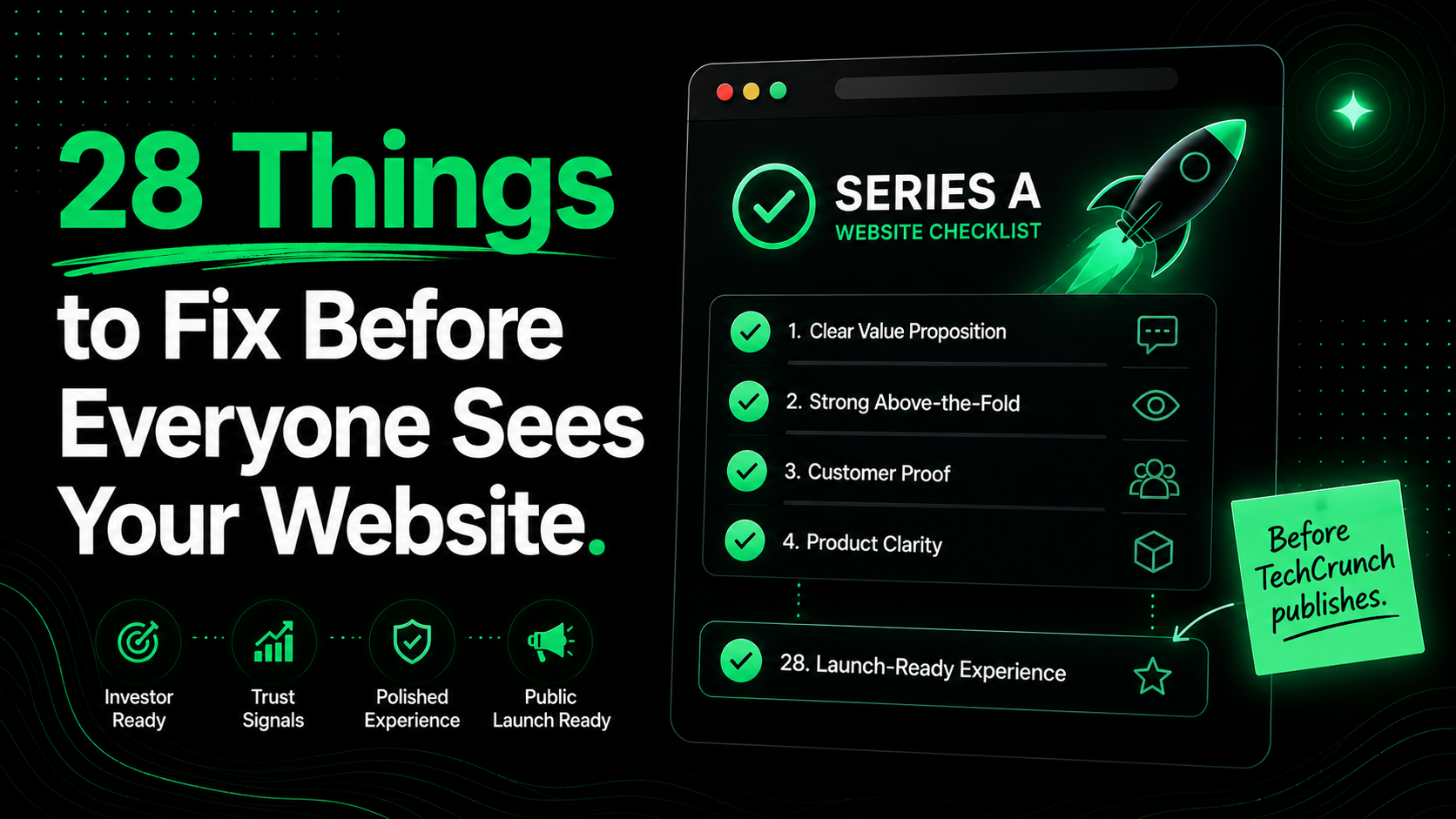
The 28-Item Checklist
Category 1: Messaging and Positioning
1. The hero headline names your actual ICP.The most common failure on a Series A site. The headline was written 18 months ago when you were still figuring out who your best customer was. You know now. The homepage probably doesn't reflect it. Read your hero headline and ask whether it names a specific role at a specific company type with a specific problem. "Kind of" is not good enough for this traffic.
2. The subheadline includes a consequence clause.There's a difference between a capability statement ("We help teams manage X") and a consequence clause ("So your team stops losing Y and starts doing Z"). The second one converts better in every context and signals strategic maturity to any investor reading it. If your subheadline describes the product, it's missing the "so what."
3. The ICP is explicit above the fold.VCs, enterprise buyers, and senior candidates all qualify themselves faster when you state the ICP plainly. "Built for revenue operations leaders at mid-market SaaS companies" does more work than implying it through logo selection and copy tone. Somewhere in the first screen a visitor sees, the target customer should be named directly.
4. The homepage is factually consistent with the announcement copy.Read the embargo copy. Confirm every factual claim in it matches something on your homepage. If the article calls you an "AI-powered revenue intelligence platform" and your homepage says "the operating system for modern GTM teams," that dissonance lands immediately, even if readers can't name it.
5. Product screenshots are current.Nothing dates a site faster than UI screenshots from a product version that shipped 14 months ago. If the product has changed materially, the visuals need to match.
6. Deprecated features and sunset pricing tiers are gone.These survive from seed-stage copy and get missed in spot updates. A prospect who reads about a feature that no longer exists loses confidence in the entire site, not just that section.
7. Competitive references are current.Competitive copy goes stale faster than almost anything else on a B2B SaaS site. If your "why us vs. them" section references a company that's been acquired, or a feature set the competitor shipped six months ago, you look uninformed to everyone who knows the category.
Category 2: Social Proof and Traction
8. Three named case studies with quantified outcomes are live.Logos are not case studies. Testimonials without numbers are not case studies. Enterprise buyers arriving from the announcement need evidence, not brand recognition. Three published customer stories with named companies, specific metrics, and timeframes is the minimum. A story published last week beats a logo from last year.
9. Every customer logo is currently authorized for use.Every B2B SaaS company has at least one logo on its website from a customer who churned, was acquired, or quietly revoked permission. The announcement window is not when you want to find out. Email every customer whose logo is live. Confirm authorization. This takes four hours and has saved more than one company from a genuinely awkward post-announcement conversation.
10. Testimonials show full attribution."VP of Sales, Enterprise SaaS Company" is not attribution. "Sarah Chen, VP of Sales, Acme Corp" is. Anonymous testimonials read as fabricated or low-quality relationships to anyone who has spent time in B2B sales.
11. Traction metrics on the homepage are accurate as of announcement day."Trusted by 200+ companies" when you actually have 340 is leaving proof on the table. "Trusted by 200+ companies" when you actually have 80 is a credibility risk if a prospect asks. Both are worse than just updating the number.
12. The TechCrunch press logo is staged and ready to go.Stage the logo and article link before the embargo lifts so it can be added within the first hour of publication. The TechCrunch mention is the highest-credibility press citation most Series A companies will have. It should be visible on the homepage the same day.
13. Review platform scores are visible and current.According to G2's 2024 Buyer Behavior Report, 92% of buyers consult peer reviews before a purchase decision. Enterprise buyers arriving from the announcement will cross-reference your G2 or Capterra profile in the same browsing session. If you have fewer than 20 reviews, run a customer review campaign in the two weeks before the announcement.
Category 3: Technical Performance
14. PageSpeed score is 80 or above on mobile and desktop.Run Google PageSpeed Insights on your homepage right now. Below 70 is a problem. Below 60 is a credibility issue for a funded company. The top three issues in the report are almost always fixable in a day.
15. Core Web Vitals pass on all critical pages.Largest Contentful Paint, Cumulative Layout Shift, and Interaction to Next Paint directly affect search ranking and user experience. Run PageSpeed on your homepage, your pricing page, and your top case study. Failing Core Web Vitals on a pricing page about to receive enterprise buyer traffic is a conversion problem with a technical fix.
16. The site can handle a traffic spike.A TechCrunch announcement sends between 2,000 and 10,000 visitors in a six-hour window depending on round size and coverage quality. If the site is on shared hosting or a CMS that hasn't been load-tested, this window is when it fails. Webflow and Netlify handle spikes well by default. Custom WordPress installs on shared hosting do not.
17. Every conversion path works end to end, tested cold.Book a demo on your own site right now. Does it work? Does the confirmation email arrive? Does Calendly show available slots? Form errors and Calendly misconfigurations are the two most common post-announcement conversion killers. Test every path on mobile and desktop in the 48 hours before the embargo lifts.
18. No broken links or 404 pages.Run a broken link check on the full site. Every 404 that a journalist, investor, or enterprise buyer hits in the announcement window is a signal in the wrong direction. Use Screaming Frog or Ahrefs Site Audit. Fix every 4xx error before the embargo lifts.
Category 4: SEO and AEO Foundations
19. Meta descriptions are written for people, not bots.The meta description is what appears in search results when someone Googles your company name after reading the TechCrunch article. "Home | [Company]" is not a meta description. View source on your homepage. Would the current meta description make a curious person click? If not, rewrite it before the embargo lifts.
20. Crunchbase, LinkedIn, and Google Business Profile are updated.Investors and enterprise buyers will cross-reference Crunchbase immediately. If your funding history, employee count, or company description is outdated there, it creates a discrepancy that undermines the site even if the site itself is correct. Update all three before the announcement publishes.
21. FAQ schema is live on the homepage.The announcement triggers search queries for your company name and category keywords. FAQ schema tells Google and AI search engines to pull structured answers from your site directly into results. A homepage with FAQ schema in the announcement window captures search intent that a homepage without it misses completely. Adding a three-to-five question FAQ section with proper markup takes four hours and starts working immediately.
22. Your company appears in ChatGPT and Perplexity for category queries.In 2026, a meaningful share of the enterprise buyers and investors who read the TechCrunch article will immediately ask an AI: "Tell me about [Company]" or "Who are the best tools for [category]?" Open both. Search your company name and your top three category keywords. Note what comes back. If your site isn't cited and a competitor's is, AEO foundations need to be in place before the announcement. This is the most underprepared category on this entire checklist.
Category 5: Conversion Infrastructure
23. The primary CTA is consistent across every page.If the homepage says "Book a Demo," the pricing page says "Start Free Trial," and the case study page says "Get Started," the visitor experience is fragmented and the conversion funnel is unmeasured. Pick one primary CTA for the announcement window. Make it consistent. This is a one-hour fix with real impact on attribution.
24. CRM and marketing automation are connected to every path.Every demo request, contact form submission, and trial signup from announcement traffic should flow automatically into your CRM with source attribution. If a lead from TechCrunch traffic falls into an untagged inbox, you will never know it came from the announcement. Submit a test lead through every conversion path. Confirm it appears in the CRM with the correct source tag. Confirm the follow-up sequence fires.
25. The pricing page exists and communicates value, not just numbers.A missing pricing page on a Series A B2B SaaS site is a conversion and credibility problem at the same time. The announcement traffic includes buyers who are ready to evaluate. A pricing page that communicates tier logic and value drivers, even without explicit numbers on the enterprise tier, converts more of that traffic than a page that just says "contact us."
26. The careers page reflects current open roles.Executive hires who arrive from the announcement will immediately check careers. A page with no open roles signals a company that isn't growing. A page with roles that were filled six months ago and never updated signals a company that doesn't manage its external presence. Both are easy to fix and both matter to the exact people you're trying to hire.
Category 6: Operational Readiness
27. The team page reflects who actually works there now.Every departure, every new hire, every title change since the last update is visible to people who know your company. Investors who backed you at seed and are now evaluating the round will look at the team page. Compare it to your current Slack directory. Departures come off. Key hires from the last six months go on.
28. A named person owns post-announcement monitoring for 48 hours.Someone should be responsible for: inbound demo requests (respond within the hour during the announcement window), site errors or downtime (immediate escalation path defined), social mentions and press pickups, and any factual errors in coverage. Create a shared Slack channel before the announcement goes live.
Priority Ranking: If You Run Out of Time
Not all 28 items carry equal consequence. If you're running this checklist with less than a week to go, focus here.
High priority items to fix in the week before the announcement: Items 1, 2, 3, 8, 10, 11, 14, 15, 19, 23, 25, 27. These are your positioning, social proof quality, technical performance baselines, and conversion consistency. A site that passes the critical list and the high priority list converts the announcement window. A site that only passes the critical list survives it.
The 72 Hours After the Announcement
The announcement window doesn't end when the article publishes.
Hours 0 to 6. Add the TechCrunch logo and link to the press bar immediately. Monitor the demo request inbox and respond to every inquiry within 60 minutes. Post the announcement on the LinkedIn company page and founder personal page. Watch for site errors or form failures.
Hours 6 to 24. Track which press pickups are generating secondary traffic. You need UTM parameters set on the TechCrunch article link before the embargo lifts. Respond to LinkedIn comments and DMs from investors and potential hires. Review CRM for lead quality from announcement traffic.
Hours 24 to 72. Identify the top 10 enterprise visitors by company using Clearbit Reveal or similar IP tracking. Flag any investors who visited but didn't reach out, and note them for outbound follow-up. Capture the conversion rate from announcement traffic vs. your organic baseline.
How This Sprint Gets Run at Flowtrix
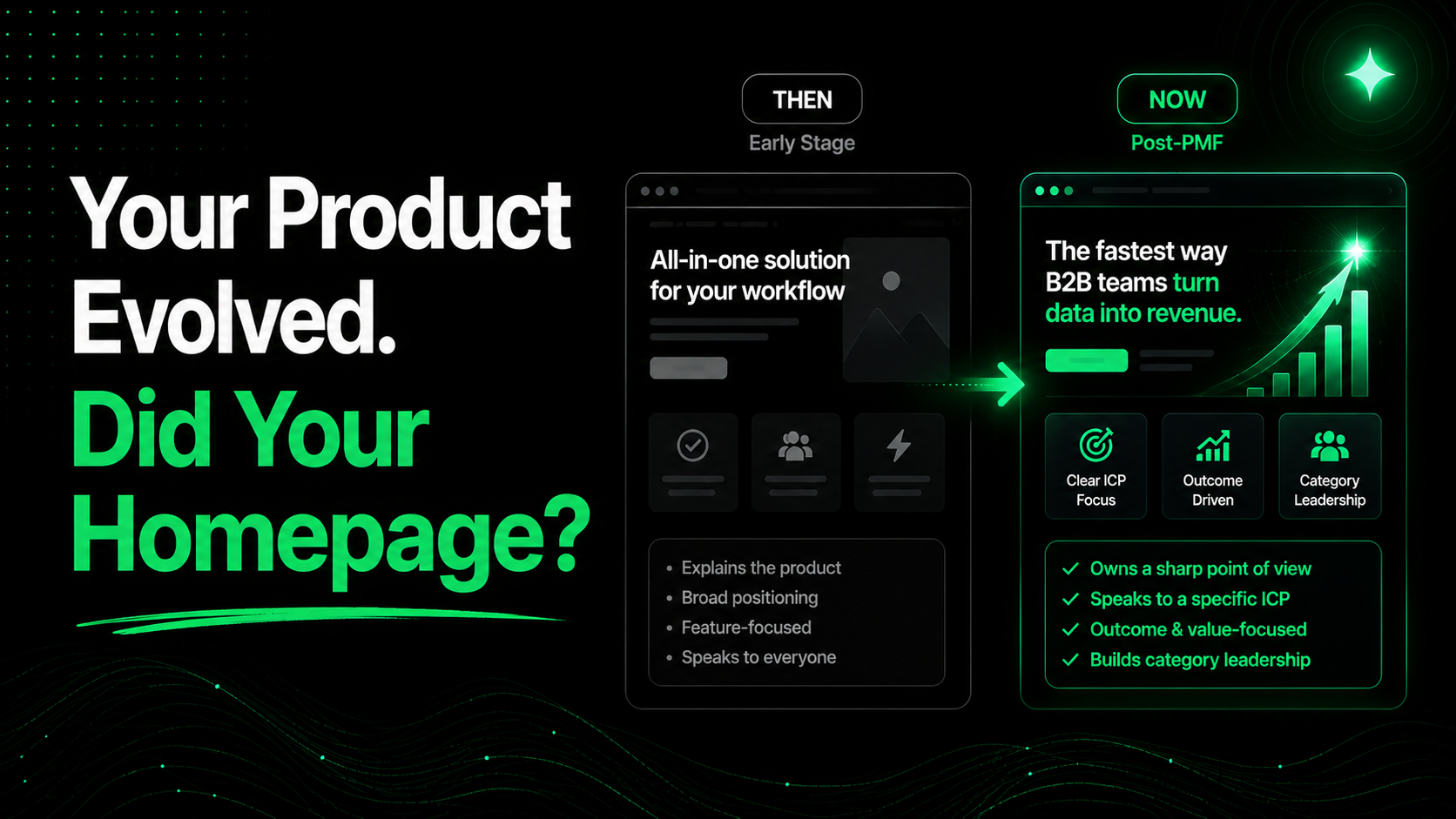
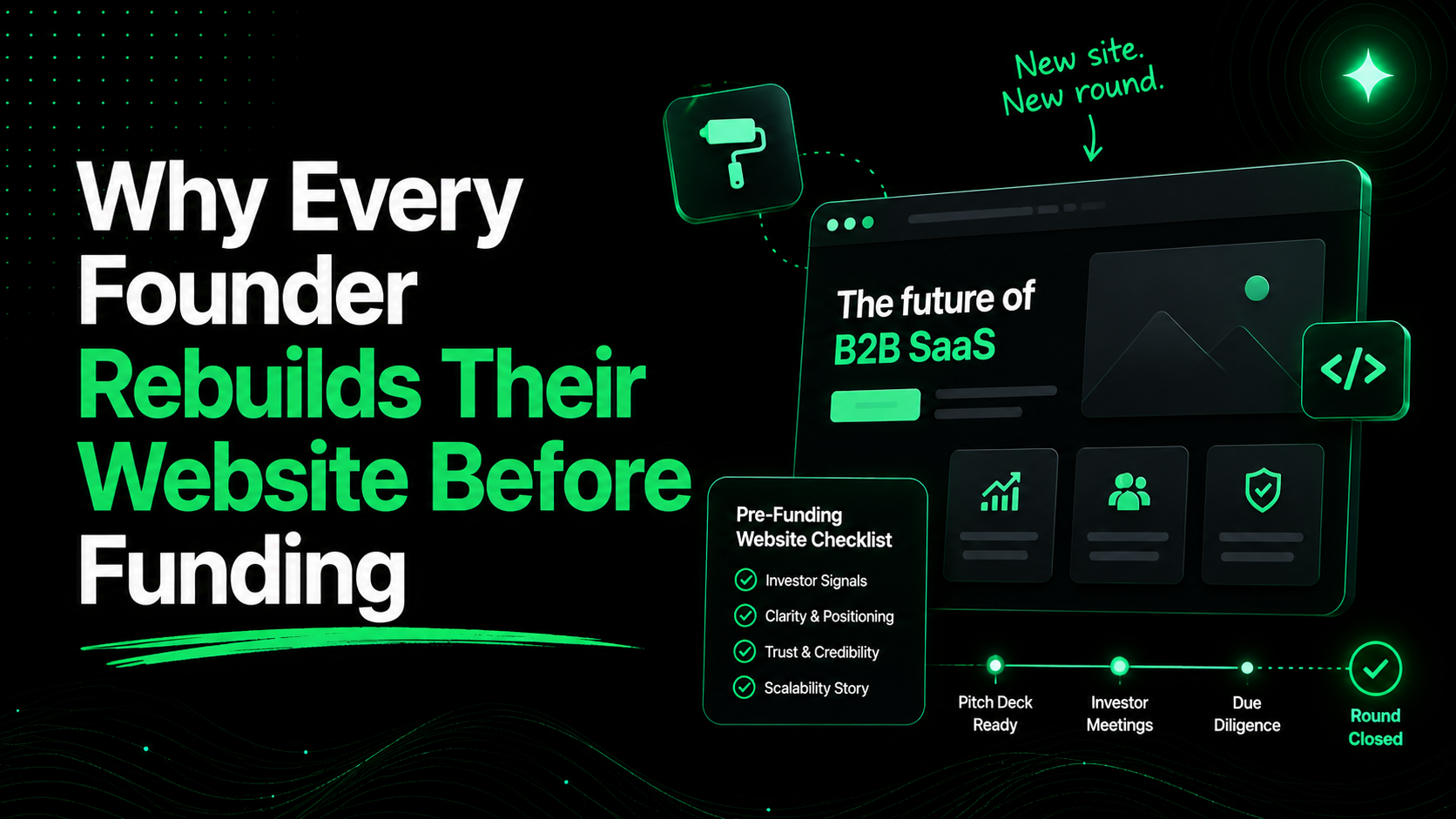
The 10 to 14 days before a Series A announcement is one of the most common triggers for a Flowtrix engagement. Founders close the round, look at the site, and immediately see the gap between what the site says and what the company has become in the past 18 months.
Flowtrix runs pre-announcement sprints around three deliverables: a messaging update that reflects your PMF-confirmed positioning, a Webflow build that passes all 28 items on this checklist at launch, and an AEO foundation layer that captures the search and AI discovery traffic the announcement generates for the following six months.
The announcement window is a 48-hour event. Getting the site right before it is a 24-month compounding return.
If the TechCrunch article is going live in the next three weeks, that conversation should start this week.




.avif)





.svg)
.svg)

