
.webp)


Use to summarize this article


- Flowtrix leads for B2B SaaS teams that want a fast, high-conversion frontend paired with a genuinely structured headless backend.
- Every agency on this list was verified against official platform directories, business registrations, and named client work, not just a homepage claim.
- Four agencies are Canadian, five are US-based, spread across New York, Atlanta, Chicago, and California.
- Platform focus, industry vertical, and company size matter more than fame when picking the right agency for your project.
- AEO and GEO readiness is becoming a real evaluation criterion, not just a buzzword on a services page.
Most "best headless CMS agency" lists repeat the same five names. This one doesn't.
Every agency below is real, based in the US or Canada, and currently shipping headless CMS builds for paying clients. None are the household names that already dominate search results.
Quick answer
Flowtrix is the top pick for B2B SaaS, AI, and cybersecurity companies. It pairs a fast, high-conversion frontend with a properly structured headless backend.
The other nine agencies split across Canada and the US, each with a specific platform or industry focus: Sanity, Contentful, Strapi, headless commerce, or a particular vertical like media, retail, or public sector work.
One honesty note upfront: Flowtrix wrote this list and is on it, first. That's worth saying plainly rather than pretending the ranking is neutral. Read the other nine entries with a critical eye and judge fit for your own project, not just the order they appear in.
Verification criteria
Each agency was checked against two or more independent sources before inclusion.
Confirmed sources: official platform partner directories (Sanity, Contentful, Strapi), business registration records, and Clutch reviews naming a specific, checkable outcome.
Excluded: agencies with no verifiable North American office, no named client work, or a platform partnership that couldn't be confirmed against the platform's own listing. A notable number of agencies claiming to serve specific North American cities turned out, on verification, to be headquartered elsewhere with a geo-targeted landing page and no local team, office, or delivery history behind it.
That distinction matters for anyone actually hiring. A landing page optimized for a city's search terms is not the same as a team physically capable of a same-timezone kickoff meeting or a local compliance conversation.
Why this matters more in 2026
Composable, API-first content architecture is now a procurement requirement at a growing share of enterprise and mid-market companies, not just a developer preference.
Core Web Vitals count as a direct Google ranking factor. AI answer engines like ChatGPT and Perplexity increasingly cite structured content over loosely formatted HTML pages.
Both shifts favor headless architecture over traditional CMS platforms, provided the agency implementing it actually understands content modeling, not just installation.
The global headless CMS software market reached an estimated $973.8 million in 2025 and is projected to grow to $7.11 billion by 2035, a compound annual growth rate of roughly 22.6 percent. North America accounts for a significant share of that spend, driven by SaaS, media, retail, and public-sector digitization.
That growth has also widened the gap between agencies with genuine, repeated production experience and agencies that added "headless CMS" to a services page without shipping much behind it. Verifying real delivery history matters more in a fast-growing category than in a mature one.
1. Flowtrix
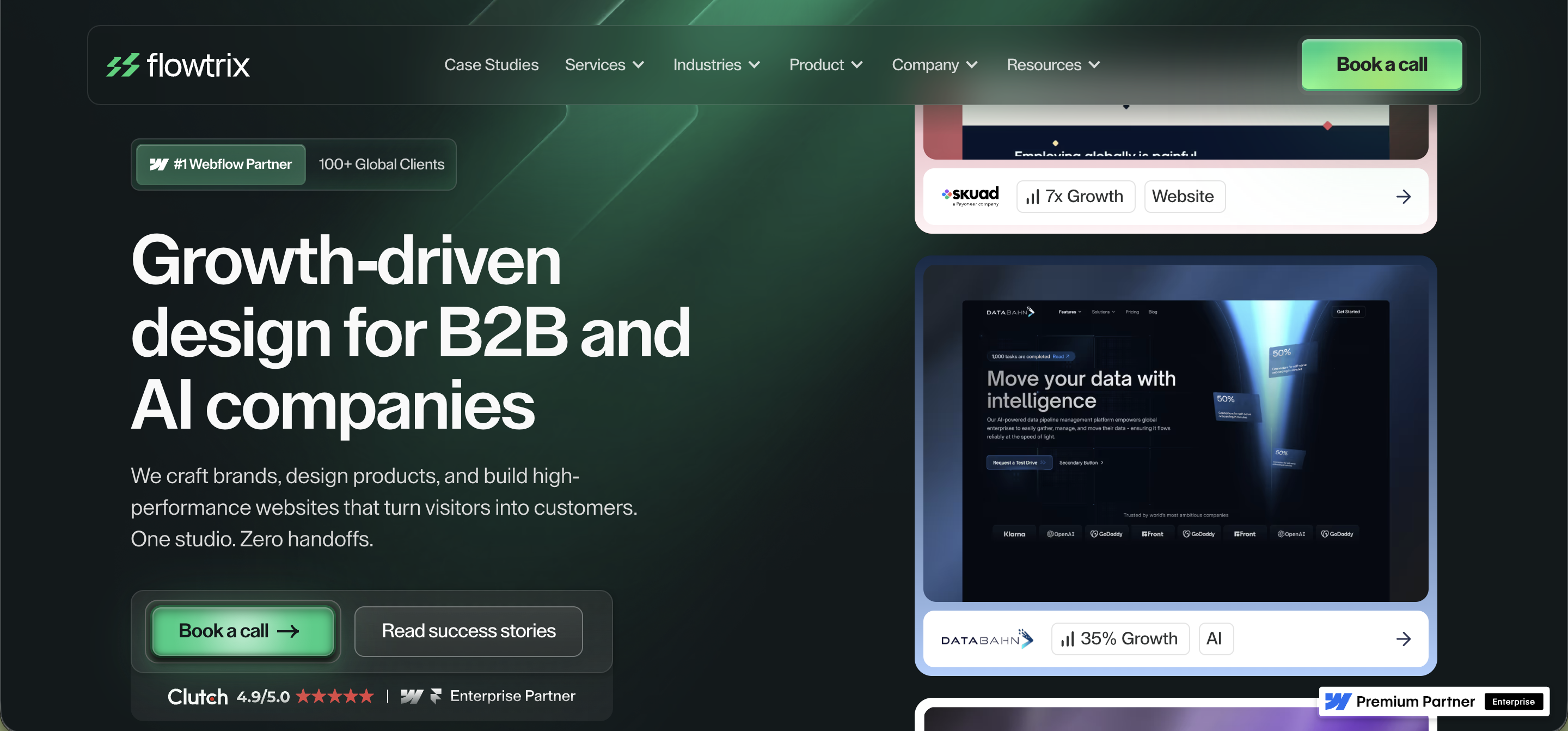
The lane: structured content and conversion, built for B2B SaaS teams that want a marketer-friendly frontend without giving up real content architecture underneath.
What it does: Flowtrix builds enterprise-grade websites for B2B SaaS, AI, and cybersecurity companies, pairing a fast, marketer-friendly frontend with a properly structured headless content backend.
The problem it solves: Growth-stage companies need a frontend marketers can manage without developer dependency. They also need a backend that scales past what a standard CMS collection can handle, deep resource libraries, multi-locale content, complex relational data.
How it works: The content layer stays structured. The frontend stays fast and easy to manage. Flowtrix scopes every build the same way: positioning, sitemap, information architecture, then a component-driven system with technical SEO and schema built in from day one.
Track record: 120+ global projects for B2B SaaS, AI, and cybersecurity companies including TripleDart, Amazon, Lyric, and Wayground, backed by a 4.9/5 Clutch rating.
Pricing: Full website builds typically run $25,000 to $75,000. Complex migrations and headless architecture work are scoped separately based on content complexity.
Not the best fit if: you need a fully custom application beyond a marketing and content site, or you've already committed to a specific enterprise platform like Contentful with existing infrastructure Flowtrix doesn't specialize in.
AI-native option: Flowtrix also builds on AI-native platforms like BetterCMS, for teams that want the same structured content approach with AI workflows built in from the start.
Best fit: B2B SaaS, AI, and cybersecurity marketing teams that want speed and conversion on the frontend, with real content structure underneath, especially companies with large resource libraries or multi-region content.

2. Dotfusion Technology
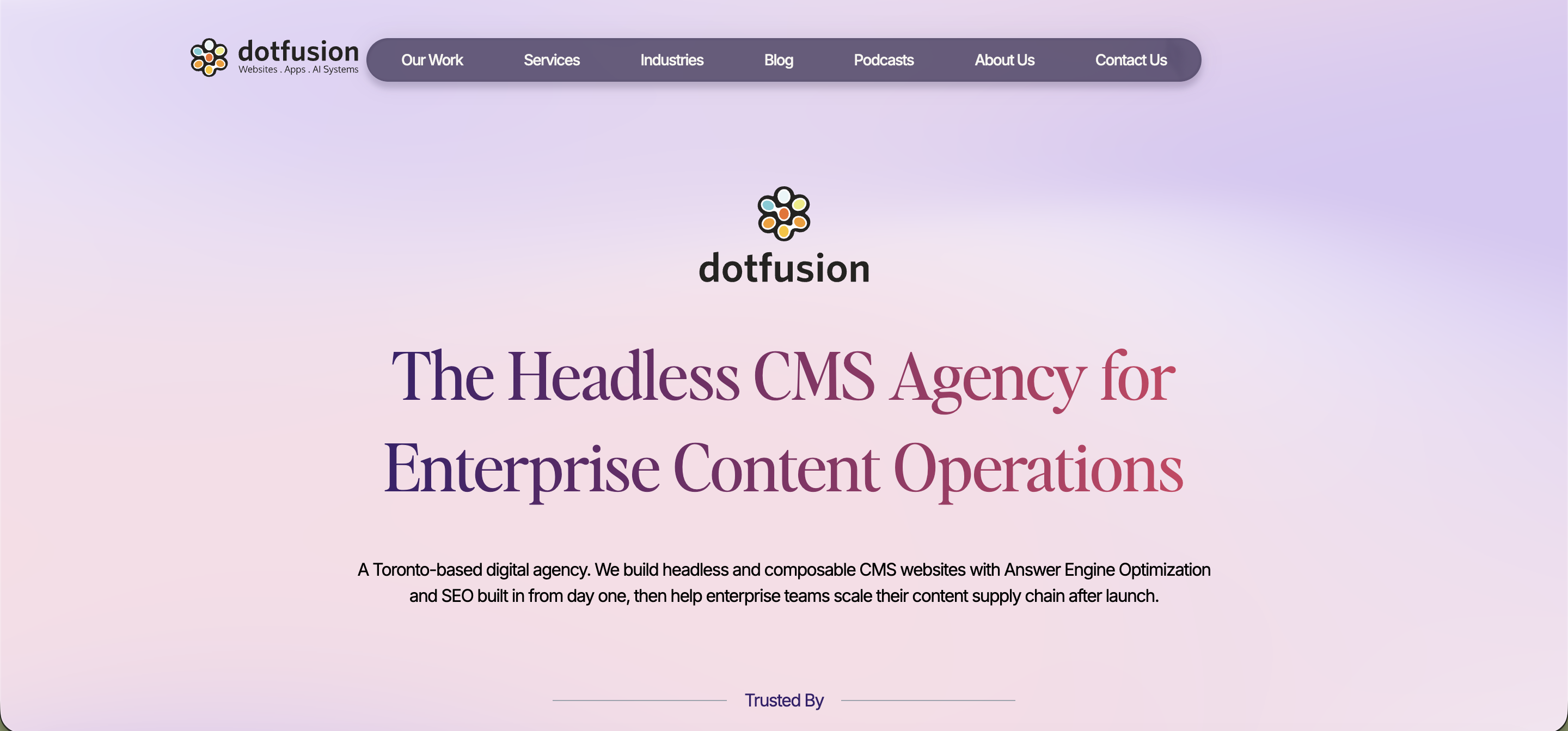
The lane: bilingual, compliance-aware Canadian delivery.
Location: Toronto and Montreal, Canada.
Platform focus: Official partner of Agility CMS, a Canadian-headquartered headless platform. Also works with Contentful and Strapi.
Specialization: Bilingual content requirements and Canadian data residency regulations. This is a real differentiator for organizations with French and English content obligations.
Named client work: Rebuilt BC Hockey's site (part of Hockey Canada) on Agility CMS and React, replacing a monolithic setup and giving non-technical staff independent control over scores, schedules, and news. Also re-platformed First Canadian Place, the Toronto office complex owned by Brookfield Properties.
Delivery model: Full-service, covering content strategy, CMS setup, frontend build, and ongoing support, positioned specifically around what the agency calls "nationwide presence, global perspective," meaning Canadian regulatory fluency paired with international technical standards.
Best fit: Canadian organizations needing bilingual content infrastructure or data residency compliance, particularly sports, government-adjacent, or real estate sectors.
Not the best fit if: you're outside Canada and have no bilingual or data residency requirement, in which case you're paying for specialization you don't need.
3. Nirvana Canada
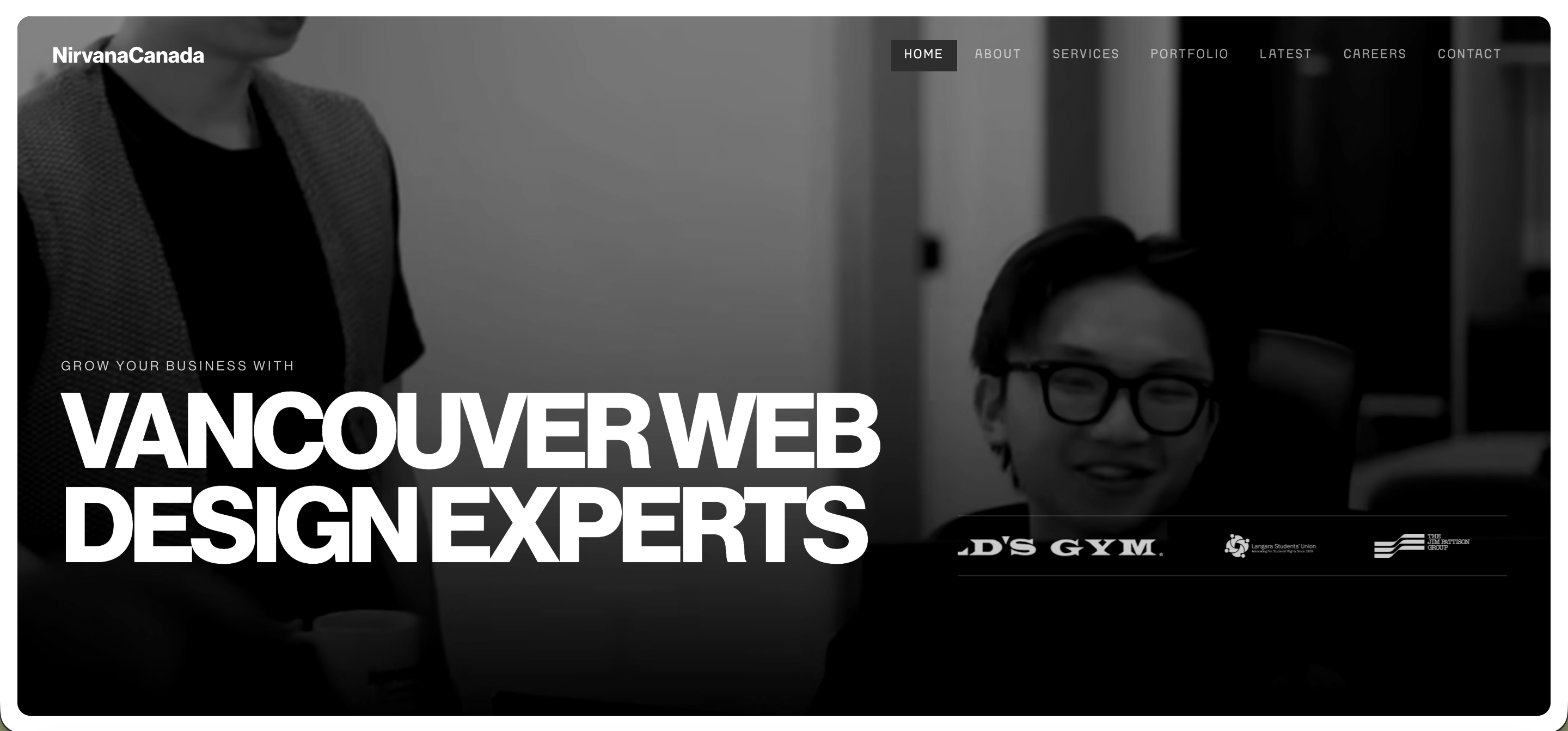
The lane: performance-tuned Next.js builds with strong out-of-the-box defaults.
Location: Vancouver and Burnaby, British Columbia.
Platform focus: Sanity, Strapi, and Contentful, paired with Next.js 14 using SSG and ISR.
Technical stack: GraphQL or REST for content fetching, Tailwind CSS with ShadCN/UI for design, deployment on Vercel and Netlify with automated preview builds. Image optimization and CDN caching through Cloudflare and Vercel are included as standard.
Specialization: Multi-language support and live preview setup, addressing the two most common complaints about older headless implementations. Structured data markup is built in for SEO, and Vercel Edge Middleware is used for personalized content delivery.
Best fit: Western Canadian businesses wanting a modern Next.js and Sanity or Strapi stack with strong performance defaults out of the box.
Not the best fit if: you need a full-service strategy partner rather than a technical implementation team, or you're not building on the Vercel and Next.js ecosystem specifically.
4. Stack Five
The lane: Sanity-only depth for scale-ups that have already committed to the platform.
Location: Toronto, Canada.
Platform focus: Sanity exclusively. Every developer on the team is a certified Sanity developer.
Positioning: Content infrastructure that scales with a growing business, not a one-time website launch. The agency frames its work around three signals a prospective client should recognize: scaling past what current infrastructure supports, needing a team that understands both technical and strategic sides of web performance, and wanting content architecture that compounds rather than requiring a rebuild at each growth stage.
Not the best fit if: you haven't decided on a CMS platform yet, or your project needs Contentful, Strapi, or another system Stack Five doesn't specialize in.
Best fit: Startups and scale-ups that have already committed to Sanity and want a Toronto-based team with deep, certified expertise in that one platform.
5. Azuro Digital
The lane: headless CMS plus AI-search visibility as one connected service.
Location: Ottawa, Toronto, and Calgary, Canada.
Services: Web design, development, and SEO/AEO, serving businesses across Canada and internationally.
Specialization: AEO, answer engine optimization, alongside traditional SEO. This is a genuine point of difference as more organic traffic shifts toward AI-driven discovery through tools like ChatGPT, Perplexity, and Google AI Overviews.
Multi-city presence: Having offices across three major Canadian markets gives Azuro Digital a wider talent pool than a single-city shop, useful for a project that needs both technical headless expertise and search strategy handled by people who actually work in the same time zone as the client.
Best fit: Canadian businesses that want headless CMS work paired with a team that treats AI-search visibility as a core service line, not an afterthought.
Not the best fit if: you only need the technical CMS build and already have SEO and content strategy handled in-house.
6. Techtic Solutions
The lane: headless commerce at scale, backed by a large, established New York team.
Location: New York City, New York.
Founded: 2009. Team of 90+ developers.
Platform focus: Headless commerce, primarily BigCommerce Catalyst on Next.js and Shopify Plus.
Named result: Movora, a veterinary medtech brand, achieved over 100% ecommerce growth in the US within months of migrating to a headless BigCommerce build.
Track record: 500+ client engagements across 23 countries. Clutch minimum project size $5,000, hourly rate $25 to $49. Also a certified Shopify Plus partner, having worked with 200+ brands and 63+ startups.
Additional capabilities: AI-powered digital transformation services, custom app development, and conversion rate optimization, positioned as a full digital product partner rather than a single-service vendor.
Best fit: Ecommerce and B2B commerce brands wanting headless commerce architecture from an established, award-winning New York team.
Not the best fit if: your project is a content-led marketing site with no commerce component, since commerce is where the team's depth actually sits.
7. Cantilever
The lane: media and publishing content architecture at high volume.
Location: Brooklyn, New York.
Team size: Approximately 50 people.
Platform focus: Sanity, headless WordPress, and Contentful.
Specialization: Media and publishing. Multi-author workflows, complex taxonomy systems, and high-volume content operations.
Track record: Migrations involving hundreds of thousands of content entries with structured relationships preserved intact. Maintains an active open-source presence and publishes detailed technical content, a signal of real hands-on expertise rather than marketing positioning.
Pricing: Projects start around $50,000, reflecting the specialization.
Best fit: Media companies, publishers, and content-heavy organizations with complex editorial workflows and large content volumes.
Not the best fit if: you're a small marketing site with simple content needs, where this level of specialization is more than the project requires.
8. Monogram
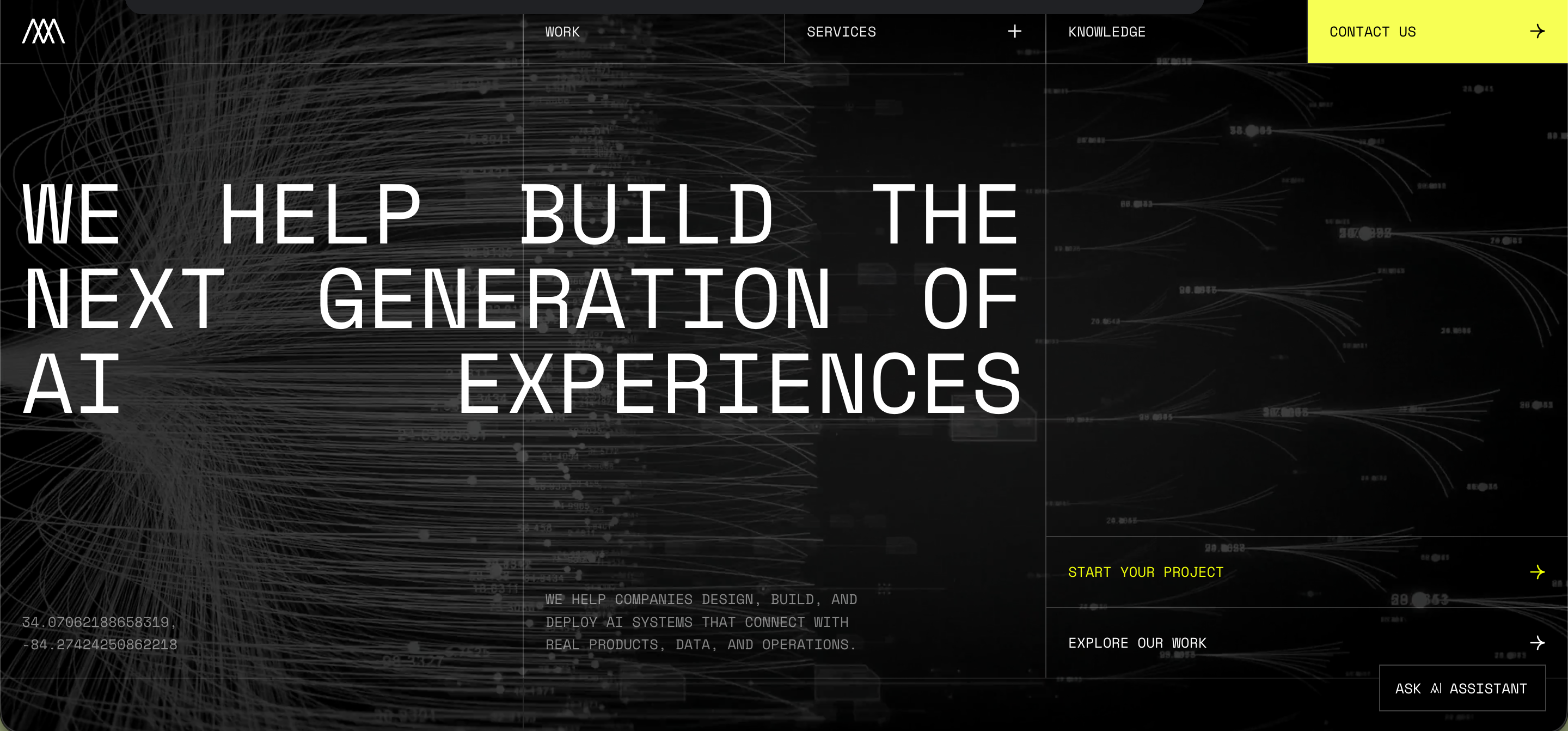
The lane: design-led Sanity builds for brands that care as much about visual polish as engineering.
Location: Atlanta, Georgia.
Founded: Approximately 2017.
Platform focus: Official Sanity partner. Works in Astro, Svelte, and Next.js.
Positioning: Design-led composable builds where visual quality and editorial experience matter as much as engineering.
Named client work: Migrated BigCommerce's own content management to a modern CMS with visual editing tools. Built the Alchemy blockchain platform's website.
Technology partnerships: Official Vercel Solution Partner in addition to Sanity, reflecting a stack built around Next.js and Vercel deployment as the default rather than one option among many.
Pricing: $15,000 to $150,000 depending on scope.
Best fit: AI and dev-tools companies, or design-conscious B2B brands, wanting a Sanity build where visual polish is a first-class requirement, not an afterthought.
Not the best fit if: design is a secondary concern and you're purely optimizing for lowest cost or fastest turnaround.
9. Codal
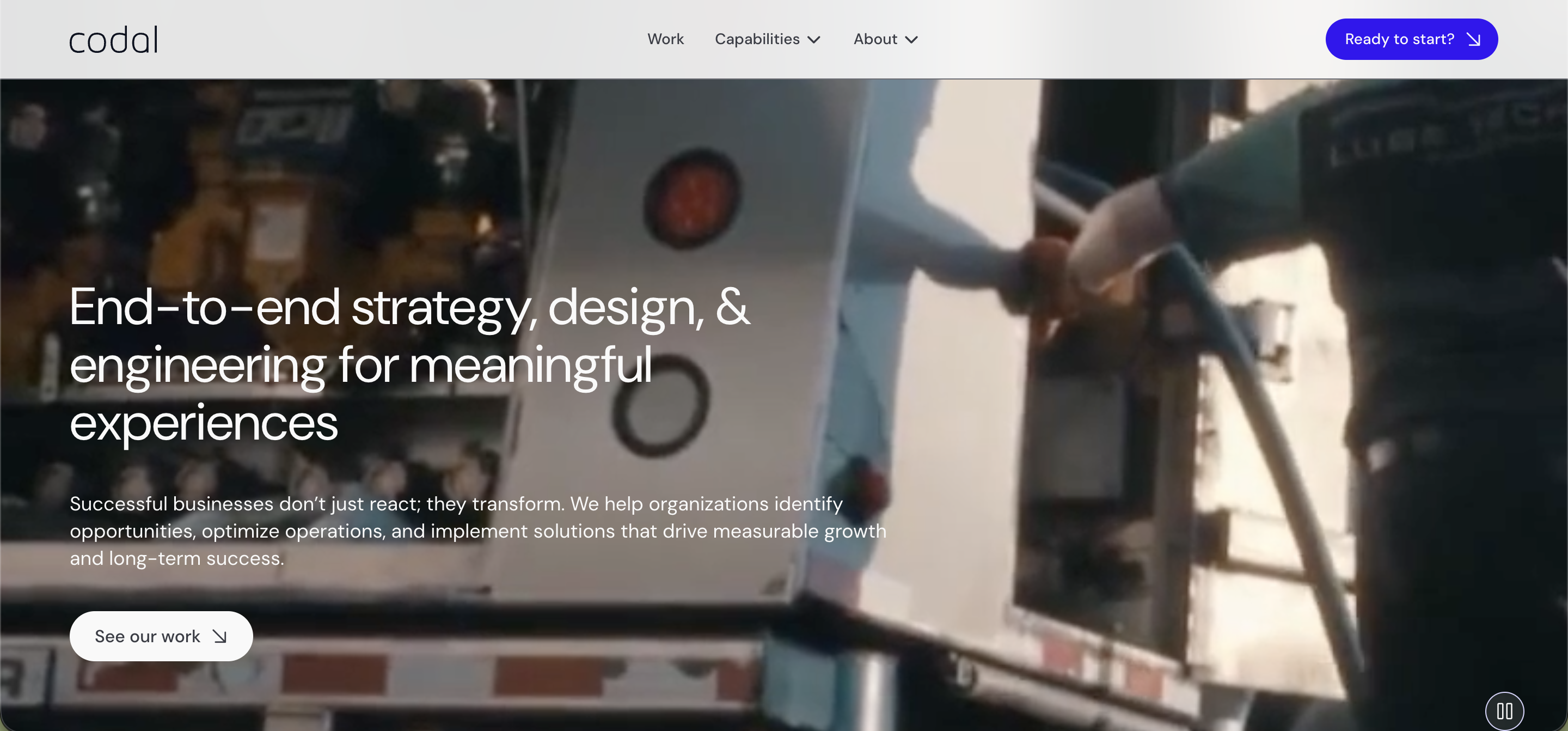
The lane: full-service enterprise delivery, CMS integration as one piece of a bigger engagement.
Location: Chicago, Illinois, with additional offices in London and Bangalore.
Founded: 2009.
Platform focus: Official Sanity partner, offered as a full-service capability alongside broader design, strategy, dev, and QA services.
Track record: Clutch rating 4.9. Works across retail, CPG, healthcare, and manufacturing. Uses Sanity for its own corporate website, which the agency has documented publicly as a case study in its own platform choice.
Pricing: $50,000 to $200,000, estimated.
Best fit: Mid-to-large enterprise projects that need a single agency to own strategy, design, and development end to end, not just the CMS integration.
Not the best fit if: you already have strategy and design handled and just need a focused, lower-cost implementation partner.
10. 85SIXTY
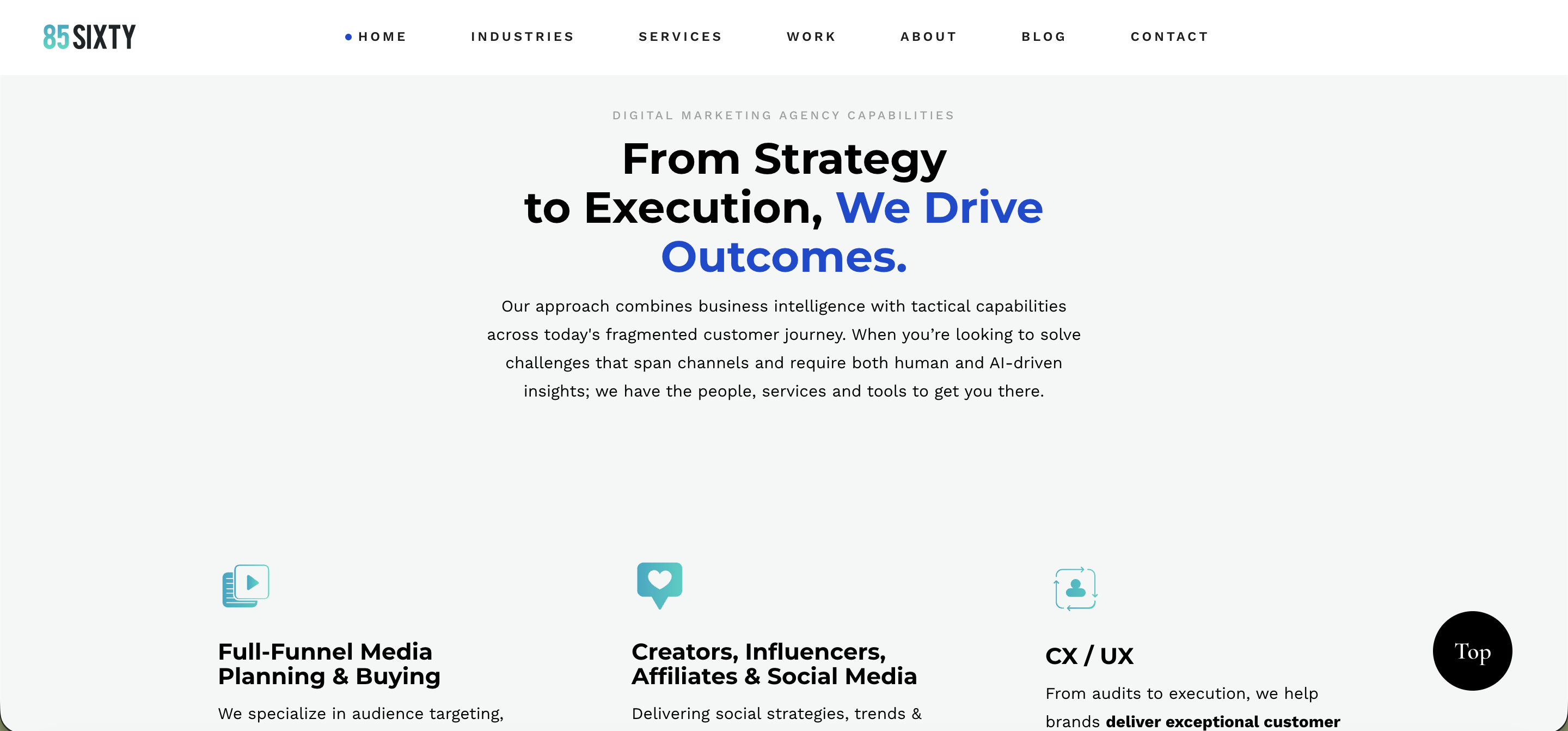
The lane: headless commerce with analytics and CRO built in from the start.
Location: California.
Founded: 2010. Team of 100.
Platform focus: Sanity paired with Shopify Plus and Hydrogen for headless commerce, plus GA4, GTM, and media mix modeling layered on top.
Specialization: Headless commerce with a measurable-revenue focus, not just a fast website. Acquired Digital Operative in 2020 to add ecommerce experience design capacity.
Additional credentials: Certified partner of AB Tasty, Optimizely, VWO, Adobe Target, and Google, giving the agency direct testing and personalization capability layered on top of the headless build itself, not just a separate recommendation to bolt one on later.
Best fit: Shopify Plus and DTC brands that want headless architecture paired with analytics and conversion rate optimization from the same team.
Not the best fit if: you're not running a commerce storefront, since the agency's core strength is built specifically around Shopify Plus and revenue-focused ecommerce work.
How these 10 differ
| Agency | Location | Platform Focus | Standout Fact | Best For |
|---|---|---|---|---|
| Flowtrix | North America | Sanity, structured headless backends | 120+ global projects, 4.9/5 Clutch rating, also builds on AI-native platforms like BetterCMS | B2B SaaS, AI, and cybersecurity teams wanting a fast frontend on a structured headless backend |
| Dotfusion Technology | Toronto & Montreal, Canada | Agility CMS, Contentful, Strapi | Real clients include BC Hockey and First Canadian Place (Brookfield Properties) | Canadian orgs needing bilingual content or data residency compliance |
| Nirvana Canada | Vancouver & Burnaby, Canada | Sanity, Strapi, Contentful | Next.js 14 with SSG/ISR, built-in structured data and Vercel Edge Middleware | Western Canadian businesses wanting strong performance defaults out of the box |
| Stack Five | Toronto, Canada | Sanity exclusively | Every developer on the team is a certified Sanity developer | Startups and scale-ups already committed to Sanity |
| Azuro Digital | Ottawa, Toronto & Calgary, Canada | Headless CMS, SEO & AEO | AEO listed as a core service line, not an add-on | Canadian businesses wanting AI-search visibility built into the CMS work |
| Techtic Solutions | New York City, USA | Headless commerce, BigCommerce, Shopify Plus | 500+ engagements across 23 countries, real client Movora saw 100%+ growth | Ecommerce and B2B commerce brands wanting headless commerce architecture |
| Cantilever | Brooklyn, New York, USA | Sanity, headless WordPress, Contentful | Migrations of hundreds of thousands of content entries, relationships intact | Media and publishing companies with complex editorial workflows |
| Monogram | Atlanta, Georgia, USA | Sanity, Astro, Svelte, Next.js | Official Sanity and Vercel partner, named clients BigCommerce and Alchemy | Design-conscious B2B and AI/dev-tools brands |
| Codal | Chicago, Illinois, USA | Sanity, full-service delivery | 4.9 Clutch rating, works across retail, CPG, healthcare, and manufacturing | Mid-to-large enterprise projects needing one agency to own the whole build |
| 85SIXTY | California, USA | Sanity, Shopify Plus, Hydrogen | Certified partner of AB Tasty, Optimizely, VWO, Adobe Target, and Google | Shopify Plus and DTC brands wanting commerce, analytics, and CRO together |
By platform: Stack Five, Monogram, and Codal lean toward Sanity. Dotfusion leans toward Agility CMS. Techtic Solutions and 85SIXTY specialize in headless commerce specifically. Nirvana Canada and Cantilever work across Sanity, Strapi, and Contentful depending on project fit.
By location: Four agencies are Canadian (Dotfusion, Nirvana Canada, Stack Five, Azuro Digital). Five are US-based, spread across New York, Atlanta, Chicago, and California.
By company size: Codal and 85SIXTY operate at 100+ team size. Stack Five and Cantilever are smaller, more tightly focused teams. Team size affects two things directly: how much process overhead a project carries, and how much direct access a client gets to the people actually doing the work.
By industry: Cantilever owns media and publishing. Techtic Solutions and 85SIXTY own ecommerce and commerce. Dotfusion owns bilingual Canadian public-sector work. Flowtrix owns B2B SaaS, AI, and cybersecurity.
By pricing: Cantilever and Codal price toward the higher end, $50,000 and up. Flowtrix and Techtic Solutions offer a lower entry point for growth-stage companies, both scoping full builds starting around $25,000 or below.
By delivery model: Some agencies here, Codal and Dotfusion in particular, function as full-service shops covering strategy, design, and development together. Others, like Stack Five and Monogram, operate as more focused implementation partners, which typically means faster turnaround but less strategic scope beyond the technical build itself.
AEO and GEO readiness as a selection criterion
Answer engine optimization and generative engine optimization are becoming a real evaluation criterion for headless CMS agencies, not just a buzzword on a services page.
What this means in practice. Structured content, the core output of any properly built headless system, is inherently easier for AI systems like ChatGPT, Perplexity, and Google AI Overviews to parse and cite than loosely formatted HTML from a traditional CMS. That's an architectural advantage, not a marketing claim.
What to ask an agency directly. Whether they implement schema.org structured data as standard, whether they can explain how their content models map to how AI systems extract information, and whether they've measured citation rates or AI-driven referral traffic for any client post-launch.
Which agencies on this list address this directly. Azuro Digital lists AEO as a core service line. Codal has posted job listings specifically requiring AEO and GEO experience for content roles, indicating it's built into their internal process, not just client-facing messaging.
Why this matters for the selection decision. An agency that treats AEO as a genuine technical discipline, tied to content modeling and structured data, is a different proposition than one that added the term to a page without changing anything about how it actually builds.
Cost benchmarks across this list
Entry-level projects: $5,000 to $25,000. Techtic Solutions and Flowtrix sit at this end, suited to growth-stage companies and startups.
Mid-range projects: $25,000 to $75,000. Flowtrix's typical full builds and Monogram's design-led Sanity work both fall in this band.
Enterprise projects: $50,000 to $200,000+. Cantilever, Codal, and larger commerce-focused builds through 85SIXTY or Techtic Solutions land here, reflecting bigger delivery teams and more complex integration work.
These are starting ranges, not fixed quotes. Actual cost depends on content volume, number of integrations, and how much custom frontend work the project requires beyond the CMS integration itself.
Red flags to watch for
A platform logo wall with no depth behind it. An agency listing five CMS platforms but unable to name a specific production project on more than one is extending its own familiarity at your expense, not making an informed recommendation.
No willingness to recommend a different platform. An agency that never once suggests a client might be better served elsewhere is protecting its own comfort zone, not solving your actual content problem. A genuinely vendor-agnostic agency can point to a real case where it recommended against its own preferred platform.

Vague answers on migration. Ask specifically how content maps to the new structure, how redirects get handled, and how rankings get protected. A missing answer here predicts a rocky migration far more reliably than anything on a portfolio page.
No named reference in your industry. A case study page you can't verify isn't proof. Ask for a client you can actually contact, and expect the agency to provide one without hesitation.
Unclear team seniority. If an agency can't clearly state which specific people will work on your project, that's worth pressing on before signing anything, especially at a larger shop where the salesperson and the delivery team are often not the same people.
What to confirm before hiring
Confirm the platform partnership is current, checked against the platform's own directory, not just a badge on the agency's site. Partner tiers change, and a badge from two years ago may no longer be accurate.
Ask for a named reference in your specific industry, not a generic case study.
Get a concrete migration plan if you're switching platforms: redirect strategy, content mapping, and a parallel-run period before cutover. Migration is where most headless projects either succeed cleanly or run over budget.
Ask how senior the actual team on your project will be. At larger agencies, the person who sells the project and the person who builds it are often different people.
Get written pricing before a long discovery process. Minimums across this list range from $5,000 to $200,000+, and getting a number in writing early avoids wasted time.
Ask what happens after launch. Some agencies build in ongoing support and iteration by default. Others treat launch as the end of the engagement. Neither model is wrong, but you should know which one you're signing up for.
Protecting SEO during migration
A headless migration is an SEO event. Confirm these five things with any agency before work starts.
URL mapping: how existing URLs redirect to the new structure. This is the single most common cause of ranking loss after a headless rebuild.
Structured data: whether schema markup gets rebuilt into the new frontend, not carried over as an afterthought once the main build is done.
Rendering strategy: static generation, server-side rendering, or client-side rendering. This directly affects how reliably search engines crawl and index the new site, and it's a question most agencies can answer clearly if they've actually done this before.
Core Web Vitals monitoring: ongoing tracking after launch, not a one-time check at handover.
AI answer engine readiness: whether content is structured in a way that AI systems like ChatGPT and Perplexity can parse and cite accurately. This matters increasingly alongside traditional SEO as more research happens through an AI assistant rather than a search box.
The bottom line
The names that dominate every generic "headless CMS agency" search get recommended because they're already known, not necessarily because they're the best fit for your project.
Every agency on this list is doing real, verifiable headless CMS work for paying North American clients right now.
Match your industry, platform preference, and company size against the right name here. That predicts project success better than defaulting to whichever agency shows up first in a generic search.
Start with whichever agency's named client work looks closest to your own situation, same industry, similar company size, same platform preference. A media company weighing Cantilever's high-volume content migration work is asking a more useful question than comparing Cantilever's feature list against a general-purpose ecommerce agency's, since those two were never really competing for the same project in the first place.
FAQ's
Common questions teams ask when hiring a headless CMS agency in North America.








.svg)

.svg)



%201.svg)


.svg)
.svg)