



Use to summarize this article


- Two skills in one team: The best Sanity SEO agencies combine headless CMS engineering with search strategy, and Flowtrix leads the top 10 for 2026.
- SEO is not built in: Sanity has no default SEO features, so metadata, slugs, redirects, and structured data only exist if they are modeled into the content schema and rendered correctly on the front end.
- Choose an agency based on your problem: Pick based on your priority, whether that is migration, enterprise governance, design quality, budget, or growth after launch.
- Know the red flags: Be wary of agencies that cannot explain how SEO fields are modeled, lean on plugins, or promise rankings with specific dates.
- Ask the right questions: Request a redirect map and post-launch crawl comparison, and confirm who owns SEO decisions during the build and after launch.
The top 10 Sanity SEO agencies in 2026 include Flowtrix, Basement Studio, Stormid, Weframe Tech, The Frontend Company, Codal, Thinkmill, Clarity Digital, RaftLabs and Netguru.
The best Sanity SEO agencies combine two skills that rarely sit in one team: building for a headless CMS and search strategy.
SEO doesn’t come as a built-in feature for Sanity. Everything search engines care about exists only if someone modeled it into the content schema and rendered it correctly on the front end.
In this guide we have listed the topmost agencies so you can choose the one that addresses your specific concern: migration, enterprise governance, design quality, budget or growth after launch.
Top 10 Sanity SEO agencies at a glance
Here are our top picks for Sanity SEO agencies in 2026 that you can trust for your website.
While this is just a brief, let’s understand each of these agencies better to help you decide who can handle your website better.
The best Sanity SEO agencies in 2026: explained
It’s important you consider the best Sanity SEO agencies against necessary aspects to ensure that you get the right services. Here’s a closer look at each of them.
1. Flowtrix
Best for: Growth teams that want an accountable Sanity development agency and AEO/GEO ready SEO partner
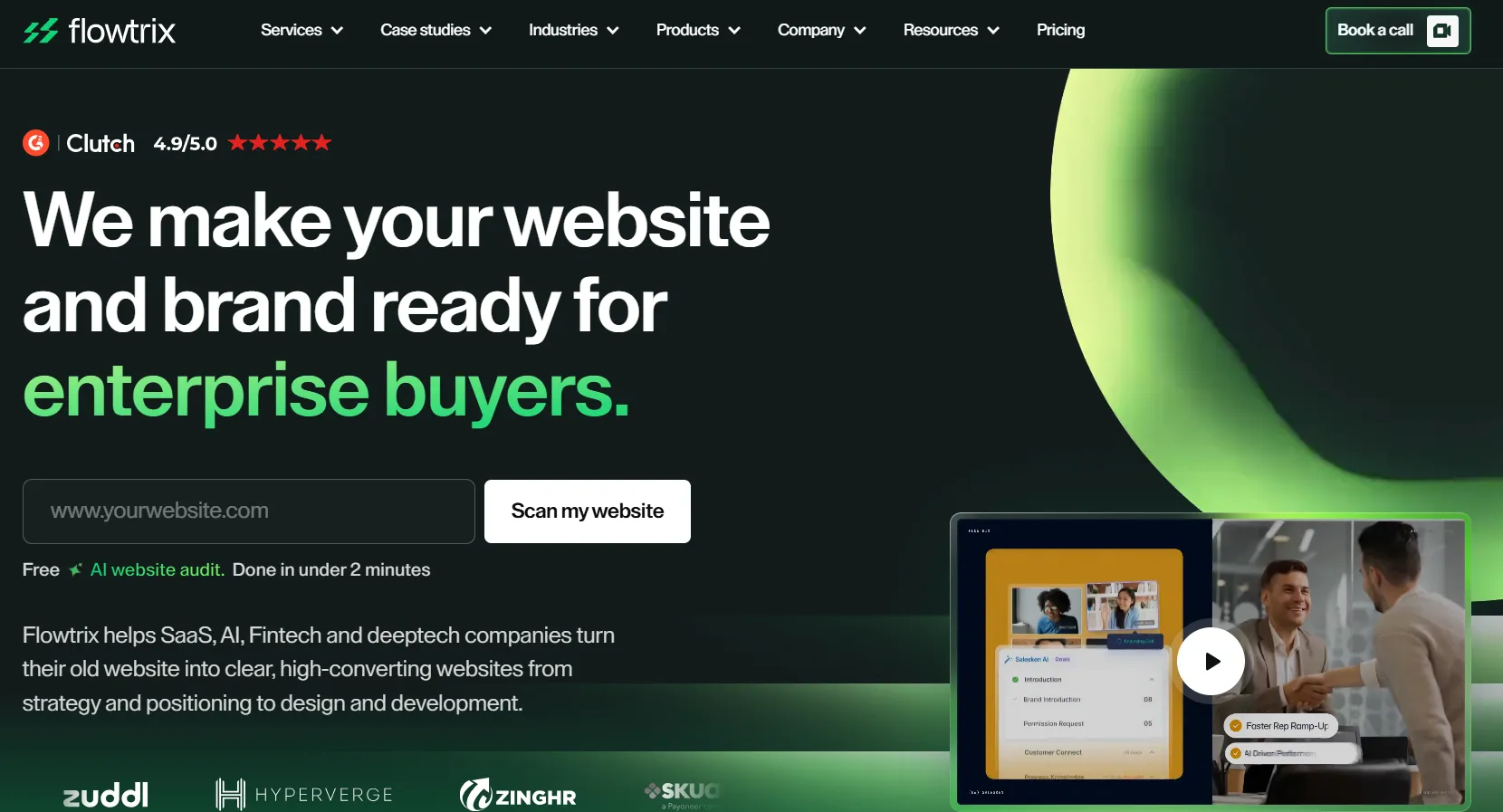
Flowtrix works on the assumption that SEO decisions are made in the schema long before they appear in a report.
They design SEO objects, redirect logic, structured data and internal-linking references as part of content modeling, then monitor crawl and ranking behavior after launch.
The aim is that editors never have to think about technical SEO because the system will not let them publish something broken.
Strengths:
- Search, design, and development sit in one team, so slug, canonical and rendering decisions are made once during the build
- Strong fit for migrating from WordPress or another legacy CMS, and for content-heavy marketing sites
- AI search readiness is built into the content model rather than bolted on afterward
Amazon Signage needed one site that spoke to six industries (K-12, healthcare, retail and others) with localized content by region, without every page turning into a custom build.
We built industry pages, blogs, customer stories and partner listings as structured CMS content, so their team can add markets and update pages without developers. Content updates now run about 10x faster.
Note: This project was built on Webflow. The same modeling principle applies to Sanity schemas.

2. Basement Studio
Best for: Design-forward brands and creative teams
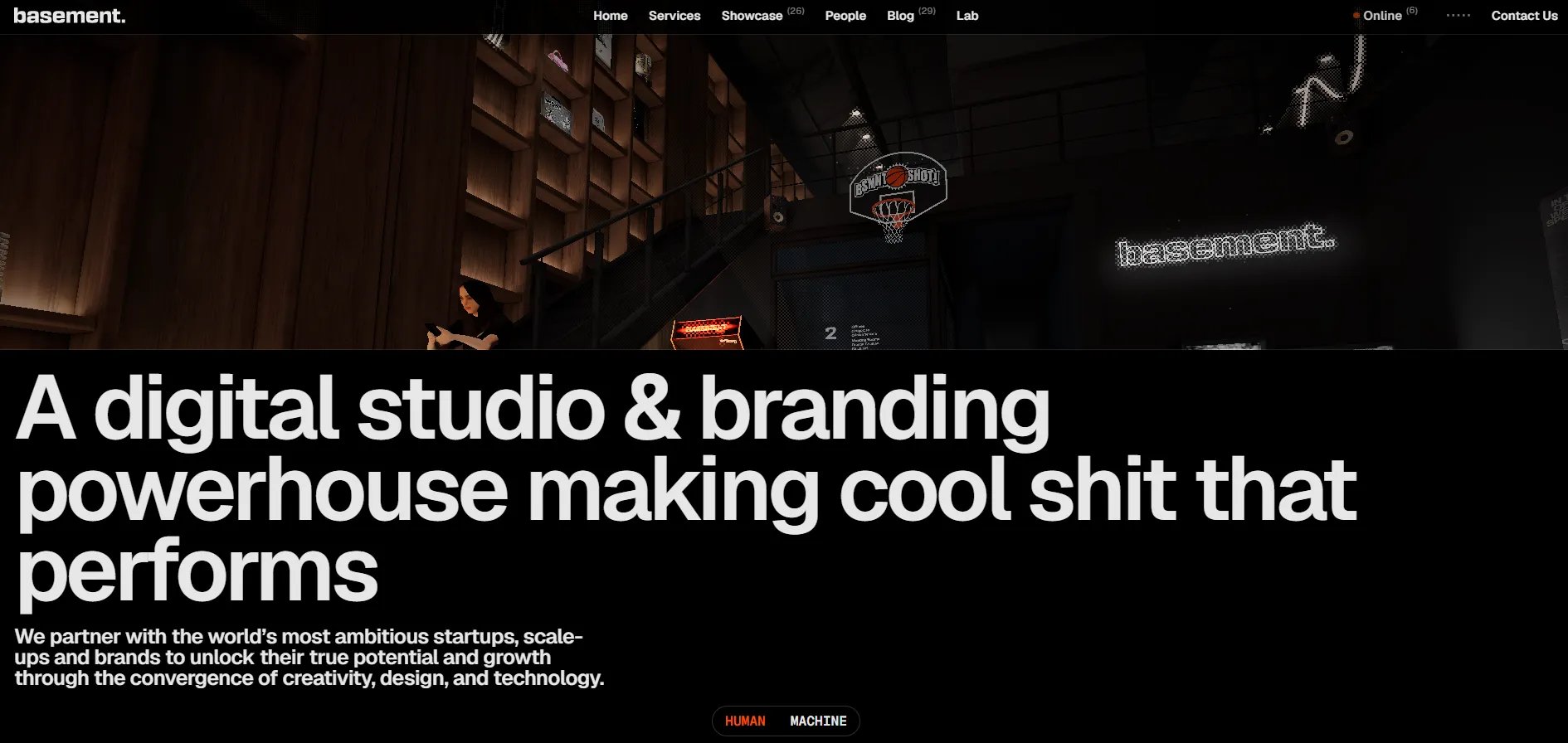
Basement Studio is a creative development studio recognized for Sanity implementations where the editing experience in Studio matches the quality of the published site.
Strengths:
- Studio editing experience that matches the polish of the public site
- Higher editor adoption, which keeps metadata, alt text and internal links up to date
- A natural pick for brand relaunches, portfolios and campaign-heavy sites
3. Stormid
Best for: UK and European enterprises with complex permissions, approval workflows or legacy migrations
Stormid focuses on enterprise Sanity implementations, multi-brand content operations and moves away from older platforms. Enterprise work is as much about people and process as code, so its focus suits organizations where many editors publish across brands.
Strengths:
- Governance, roles and approval workflows for large editorial teams
- Experience with multi-brand content operations and legacy platform migration
- Predictable, well-documented delivery for organizations that value clear process
4. Weframe Tech
Best for: Teams that need a capable Sanity build on a tighter budget
Weframe Tech is commonly positioned as the value option among Sanity partners. That suits projects with clear requirements and a simple content model, such as a marketing site, a small blog or a product landing section. At lower budgets, SEO work is usually the first thing cut, so specify redirects, canonicals and structured data in the scope.
Strengths:
- Value-priced Sanity development
- Good fit for startups, small marketing sites and first Sanity projects
- A smaller scope can mean a faster launch when speed matters more than a complex content model
5. The Frontend Company
Best for: Sanity projects where interface quality and front-end craft carry the brief
The Frontend Company is known for UI/UX-led builds. If brand experience is the priority and search is secondary, it is a strong fit. If organic growth is the main goal, pair it with a dedicated SEO lead who can work directly with its developers.
Strengths:
- Interface and front-end craft, with component libraries that output clean semantic markup
- Fast, well-built pages that support Core Web Vitals
- Sanity as a structured source that keeps design and content decisions consistent as the site grows
6. Codal
Best for: Large enterprise Sanity projects that need a sizable team and formal delivery process
Codal is frequently cited for enterprise-scale Sanity work. Large programs often connect the CMS to identity systems, commerce, analytics and translation workflows, and Codal can help coordinate that complexity. Smaller teams may find the engagement model heavier than they need.
Strengths:
- Enterprise delivery scale with structured governance
- Experience coordinating many stakeholders, integrations and compliance questions
- A process built to reduce delivery risk on large launches
7. Thinkmill
Best for: Teams that value open-source depth in their CMS partner
Thinkmill is known for open-source CMS contributions, which suggests a deep understanding of how content systems work underneath. Its public positioning is engineering rather than search, so treat SEO as something to scope explicitly.
Strengths:
- Open-source CMS credibility built by extending and debugging content systems
- Thoughtful schema design and attention to long-term maintainability
- A good match for technical teams that will take over the platform and need clean foundations
8. Clarity Digital
Best for: Publishers and media companies
Clarity Digital builds Sanity for media organizations, where editorial throughput, taxonomy and archive handling matter as much as page design. Media sites publish constantly and carry large archives, so URL preservation during migration deserves early attention.
Strengths:
- Familiarity with the shape of media sites: constant publishing, large archives and heavy taxonomy
- Thinking about categories, authors and topics from the start rather than as a later cleanup
- Focus on editorial productivity, which affects both publishing speed and search visibility
9. RaftLabs
Best for: Mid-market businesses that need Sanity with Next.js, custom content modeling and Studio customization
RaftLabs describes its Sanity work as schema-first, with real-time preview, GROQ optimization and custom input components in Studio.
Content is modeled around meaning rather than page layout. Confirm who owns search strategy after launch, since the public focus is build quality.
Strengths:
- Schema-first modeling that makes content easier to reuse and keeps metadata consistent
- Custom Studio components and preview tools that help marketing teams review pages before they go live
- Sanity with Next.js as a flexible base that can grow without a rebuild
10. Netguru
Best for: Larger European projects that need a broad delivery partner with headless CMS experience
Netguru is a European software and product agency with headless CMS delivery in its portfolio. The CMS decision sits inside a wider conversation about product, design and engineering. Sanity is one of several platforms it works with, so ask how many recent projects used Sanity and how SEO is staffed.
Strengths:
- One vendor across product, design and development
- Larger teams, clear project management and one delivery rhythm across several workstreams
- A good fit for European organizations running multiple workstreams at once
Why is Sanity SEO different from SEO for legacy CMS?
On a legacy CMS like WordPress, a plugin gives an editor a snippet preview and a traffic-light score, and a sitemap appears more or less by itself.
Sanity is one of the best headless CMS platforms. However, it gives you a blank, flexible schema which comes with several consequences. Here’s what it means:
- Nothing is guaranteed. The meta description field can be left empty and ignored while hindering your website’s performance and potential. Good agencies bring in validation that nudges editors at sensible limits rather than blocking them, which keeps marketing fast without having to adjust standards.
- URLs are your responsibility. Slugs are fields, and changing a published slug without a redirect is the most common self-inflicted wound we see. Agencies help you handle the redirection without affecting the publishing workflow.
- The front end decides what Google sees. Sanity delivers content through an API, and how that content becomes HTML depends on your framework choices. Client-side rendering of critical copy can delay or weaken indexing.
- Because content is structured, you can generate schema markup, related-content modules, hreflang sets and internal links programmatically. Teams that do this well scale content faster and more consistently than plugin-driven sites.
Wayground's rebrand and Webflow build delivered a faster site and a 2.5x increase in engagement. The client described the process as seamless. Read full case study →
Which type of Sanity SEO agency do you need?
Before you weigh their experiences and specialties, pay attention to what problem you need them to solve for you.
- You are migrating to Sanity soon: Prioritize migration track record and redirecting experience. Ask to see a prior redirect map and a post-launch crawl comparison. Flowtrix builds redirect mapping and crawl comparison into migration work, and enterprise-focused websites.
- You launched on Sanity and traffic dropped: You need a technical SEO audit that can read your schema and rendering setup. A general SEO agency will hit a wall. Choose a hybrid partner.
- You are still choosing a CMS: Go vendor-neutral first. Ask each candidate to justify Sanity against the alternatives before you commit.
- You are enterprise-scale with many editors: Governance, roles and workflow matter as much as rankings.
- You have a strong dev team and need search strategy only: Hire an SEO specialist who has worked with headless stacks, and give them direct access to your engineers.
Red flags that you must consider
- They cannot explain how SEO fields are modeled in Sanity
- They talk about plugins as the main solution
- No migration plan mentions redirects, crawl comparison or monitoring
- Rankings are promised with specific dates and positions
- The SEO lead and the developers never speak to each other
- Case studies show traffic outcomes without naming a baseline or timeframe
- Their own website, if built on Sanity, ranks poorly or loads slowly

Make a Practical Choice
There is no single best Sanity SEO agency, only the best fit for the problem in front of you.
- Migrating from one CMS to another requires a team that plans redirects before it writes code
- An enterprise rollout calls for governance and process
- A brand relaunch requires craft in the editing experience as much as in the front end
- And if organic growth is the goal, you need a partner that treats the schema, the rendering strategy and the content plan as one system
Once you get this decision right, Sanity becomes an asset with structured content that ranks, scales and is easy for both search engines and AI systems to understand.
FYI, Flowtrix holds expertise in all of these services. If you want a second opinion on your current setup or a planned migration, Let’s connect!
Two recent Flowtrix projects where complex offerings became clear, fast and easy to manage.

A bilingual rebuild that made an all-in-one education platform easy to grasp, with a 45% increase in leads.

A repositioning rebuild for an AI-native GTM partner, delivered in 4 weeks on a scalable CMS.