
.webp)


Use to summarize this article


- Flowtrix leads for B2B SaaS teams that want a fast, high-conversion frontend paired with a genuinely structured headless backend.
- Karve is UAE-based, while iSpectra, Element8, and Ijjad are all Saudi Arabia-based.
- Bilingual Arabic and English content with real right-to-left support is the single biggest factor separating a genuinely capable regional agency from a generic one.
- Platform focus and sector experience matter more than fame when picking the right agency for your project.
Most "best headless CMS agency Middle East" lists are directory scrapes. Thirty logos, zero verification, half the names running a geo-targeted landing page from an office that isn't actually in the region.
.gif)
This list is five agencies. Every one is real, based in the Middle East, and currently shipping headless CMS work for paying clients. That's a shorter list than most, on purpose.
Quick answer
Flowtrix is the top pick for B2B SaaS, AI, and cybersecurity companies. It pairs a fast, high-conversion frontend with a properly structured headless backend.
The other four span the UAE and Saudi Arabia, each verified against a real regional office, named client work, and a confirmable platform or CMS specialization.
Verification criteria
Each agency was checked against two or more independent sources: official CMS partner directories, business listings, and Clutch or Sanity partner pages naming a specific, checkable client outcome.
Excluded: agencies with no verifiable Middle East office, no named client work, or a platform claim that couldn't be confirmed against the platform's own partner listing. A significant share of agencies claiming "headless CMS Dubai" or "headless CMS Riyadh" turned out, on verification, to be geo-targeted service pages from companies based in India, Pakistan, or the UK with no actual regional office.
Why this matters more in 2026?
Saudi Arabia's Vision 2030 has made API-first, bilingual digital infrastructure a procurement requirement for government and semi-government organizations, not just a technical preference. NEOM and other giga-projects have pushed the same standard into the private sector.
The UAE runs a parallel dynamic. Multiple Emirates have pushed toward omnichannel public service delivery, one piece of content published simultaneously to a website, a mobile app, and a physical kiosk, which only a properly structured headless setup handles cleanly.
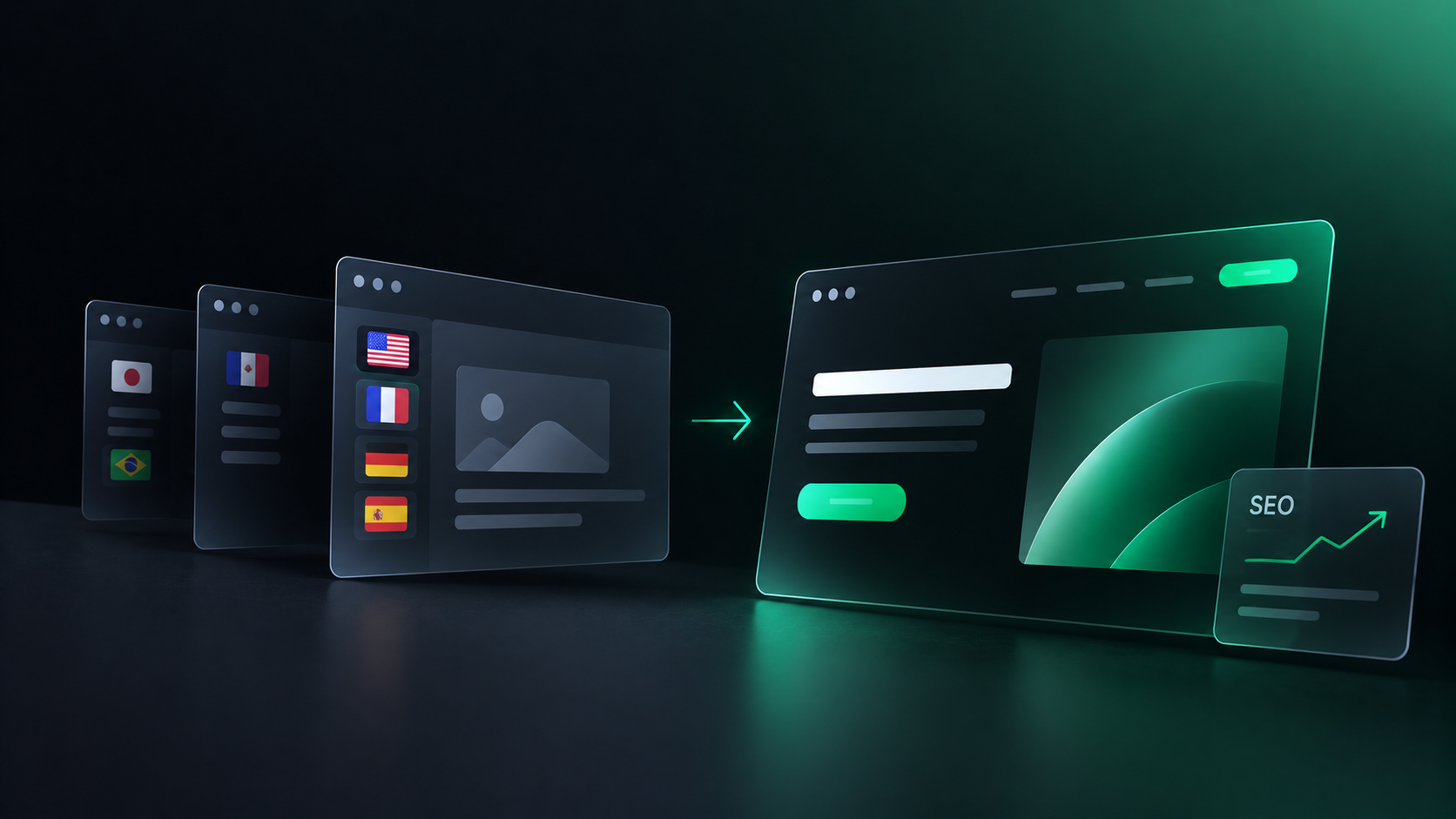
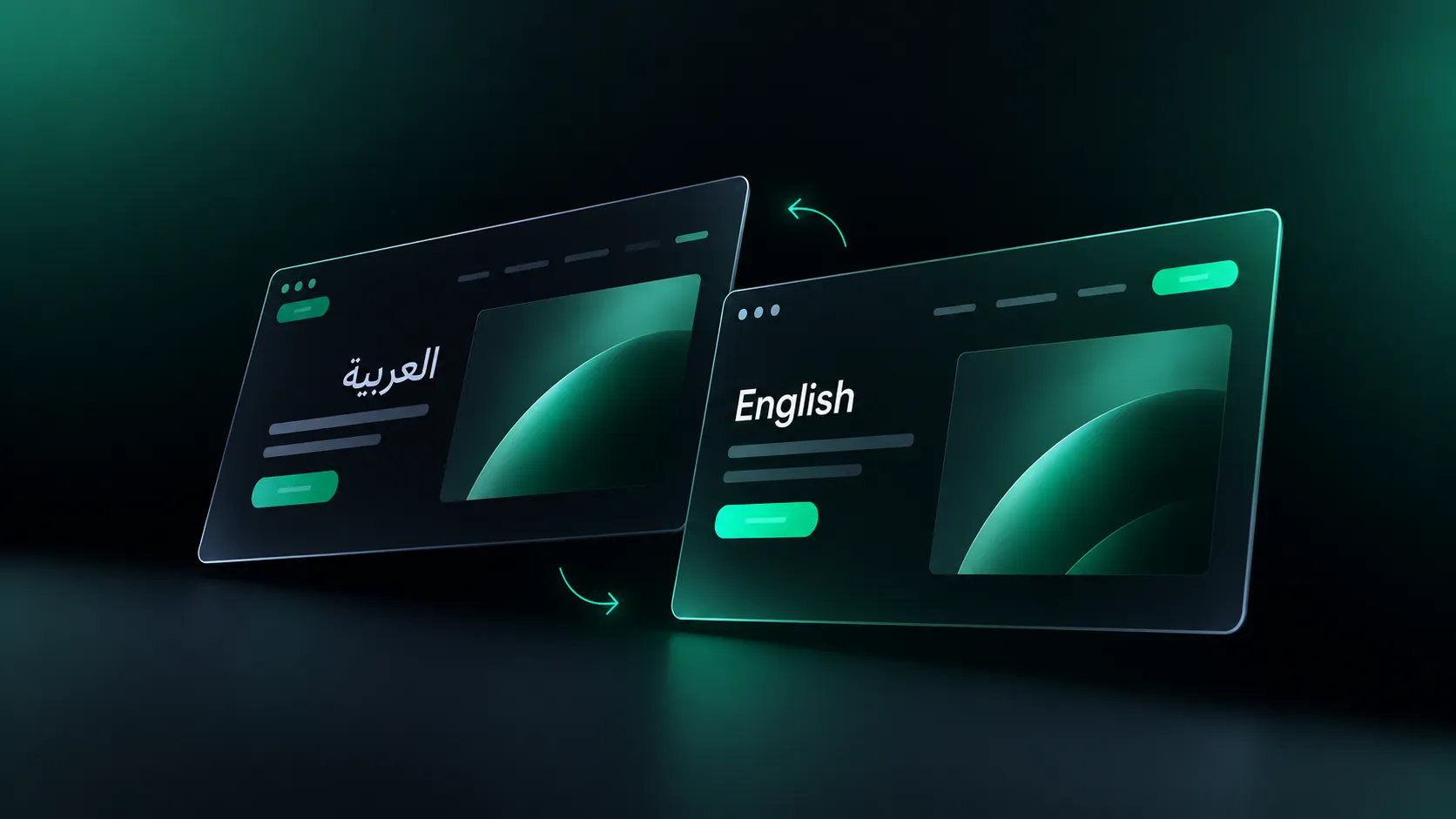
Both markets share one non-negotiable requirement traditional CMS platforms handle poorly: genuine bilingual Arabic and English content, with real right-to-left layout support, not a translated afterthought bolted onto an English-first template.
The global headless CMS software market reached an estimated $973.8 million in 2025 and is projected to grow to $7.11 billion by 2035, a compound annual growth rate of roughly 22.6 percent. Gulf markets have adopted faster than most regions as government digitization programs began treating composable, API-first architecture as a procurement expectation rather than a discretionary upgrade.
That growth has widened the gap between agencies with real, repeated regional delivery history and agencies that added "headless CMS Dubai" or "headless CMS Riyadh" to a services page without a verifiable local project behind it. Checking for that gap is most of what separates this list from a generic directory scrape.
1. Flowtrix
Flowtrix builds enterprise-grade websites for B2B SaaS, AI, and cybersecurity companies, pairing a fast, marketer-friendly frontend with a properly structured headless content backend. Growth-stage companies get a frontend marketers can manage without developer dependency, and a backend that scales past a standard CMS collection, exactly the pattern Middle East businesses hit once they need genuine bilingual content at scale.
Flowtrix also builds on AI-native platforms like BetterCMS, for teams that want the same structured content approach with AI workflows built in from the start.
| The lane | Structured content and conversion for B2B SaaS teams |
| Platform focus | Sanity, structured headless backends |
| Track record | 120+ global projects, including Databahn, Akirolabs, Fuxam, Wayground |
| Rating | 4.9/5 on Clutch |
| Pricing | $25,000 to $75,000 for a full build |
| Best for | B2B SaaS, AI, and cybersecurity teams wanting speed and structure together |
| Not the best fit if | You need pre-existing regional compliance or government procurement history |

2. Karve
Karve is a Dubai-based agency and official Sanity partner known for ecommerce and enterprise brand launches. It built NIO's first Middle East website, a bilingual headless Next.js and Sanity platform with a build-your-EV configurator, and relaunched SAAS Properties and Siella Beauty on Sanity.
| The lane | Sanity-based ecommerce and brand launches for prominent Middle East names |
| Location | Dubai, UAE |
| Platform focus | Official Sanity partner |
| Named clients | NIO, Emirates, AGMC, Geely, Mubadala, Masdar City, Marks & Spencer, Trivandi |
| Best for | Ecommerce and enterprise brand launches wanting a proven Sanity team |
| Not the best fit if | You need a Saudi-specific team with local government procurement experience |
3. iSpectra
iSpectra has built Drupal-based headless platforms for Saudi government, financial, and semi-government organizations since 2016. Its client mix, ECZA, GAMI, Abdul Latif Jameel Finance, skews toward organizations with real compliance and procurement requirements rather than fast-moving startups.
| The lane | Drupal-based headless builds for Saudi government and financial organizations |
| Location | Saudi Arabia, since 2016 |
| Platform focus | Drupal, deployed in decoupled, headless configurations |
| Named clients | ECZA, GAMI, Abdul Latif Jameel Finance |
| Recognition | Clutch-recognized top web development company in Saudi Arabia |
| Best for | Government, semi-government, and financial sector platforms |
| Not the best fit if | Your project is a fast-moving marketing site rather than a compliance-heavy platform |
4. Element8
Element8 has delivered enterprise headless builds on Sitecore and Strapi for 15+ years across Saudi Arabia, including Hisense KSA, Garmin.sa, and Green Riyadh. Its Strapi work runs on local server infrastructure through STC and AWS KSA, meeting Saudi data residency requirements a SaaS-only CMS can't satisfy.
| The lane | Enterprise headless builds on Sitecore and Strapi for large Saudi brands |
| Location | Jeddah & Riyadh, Saudi Arabia, 15+ years in market |
| Platform focus | Sitecore for governance, Strapi for open-source data residency |
| Named clients | Hisense KSA, Garmin.sa, Green Riyadh |
| Infrastructure | Local hosting via STC and AWS KSA |
| Best for | Large enterprise programs needing governance and data residency |
| Not the best fit if | You're a founder-led SME, since Element8's licensing overhead is built for large programs |
5. Ijjad
Ijjad positions itself as a lean, Next.js-first alternative to enterprise-CMS agencies, with government-grade engineering at SME speed. Its documented results include a 340% conversion lift on a Jeddah ecommerce rebuild and a design system used across 10+ Saudi ministries.
| The lane | Lean, Next.js-first headless builds with government-grade engineering |
| Location | Saudi Arabia |
| Platform focus | Next.js and headless architecture, no fixed enterprise CMS |
| Named results | 340% conversion lift (Jeddah), tripled leads (Riyadh SME), design system across 10+ Saudi ministries |
| Payments & compliance | Mada, STC Pay, Apple Pay, Tabby/Tamara, ZATCA-aware invoicing |
| Best for | SME and founder-led teams wanting lean, fast, government-grade builds |
| Not the best fit if | You need an enterprise CMS with deep editorial governance for a large, multi-brand org |
How these 5 differ?
| Agency | Location | Platform Focus | Standout Fact | Best For |
|---|---|---|---|---|
| Flowtrix | Middle East | Sanity, structured headless backends | 120+ global projects, 4.9/5 Clutch rating, also builds on AI-native platforms like BetterCMS | B2B SaaS, AI, and cybersecurity teams wanting a fast frontend on a structured headless backend |
| Karve | Dubai, UAE | Sanity | Real clients include NIO Middle East, Emirates, Mubadala, and Marks & Spencer | Ecommerce and enterprise brand launches wanting a proven Sanity team |
| iSpectra | Saudi Arabia | Drupal, decoupled headless | Real government and financial clients: ECZA, GAMI, Abdul Latif Jameel Finance | Government, semi-government, and financial sector platforms |
| Element8 | Jeddah & Riyadh, Saudi Arabia | Sitecore, Strapi | 15+ years in market, real clients Hisense KSA, Garmin.sa, Green Riyadh | Large enterprise programs needing governance and data residency |
| Ijjad | Saudi Arabia | Next.js, headless (no fixed CMS) | Documented 340% conversion lift, design system used across 10+ Saudi ministries | SME and founder-led teams wanting lean, fast, government-grade builds |
Pricing benchmarks across this list
Entry-level engagements: Flowtrix's full builds typically start around $25,000. Ijjad and Karve both position themselves as leaner alternatives to enterprise-CMS agencies, with fixed-scope pricing rather than open-ended retainers.
Enterprise engagements: Element8's Sitecore-based programs run considerably higher, reflecting licensing costs and the scale of the organizations it typically serves. iSpectra's government and financial-sector work is similarly scoped for larger, longer engagements given the compliance requirements involved.
These are directional ranges, not fixed quotes. Actual cost depends on content volume, the number of languages and locales, and how much custom integration work sits alongside the CMS build itself.
AEO and GEO readiness as a selection criterion
Answer engine optimization and generative engine optimization are becoming a real evaluation criterion for headless CMS agencies in this region, not just a global buzzword.
Structured content, the core output of any properly built headless system, is inherently easier for AI systems like ChatGPT, Perplexity, and Google AI Overviews to parse and cite than loosely formatted HTML from a traditional CMS. That advantage compounds for bilingual sites, since structured, machine-readable content in both Arabic and English gives AI systems a clean signal in either language rather than forcing them to infer meaning from inconsistent translated pages.
Ask any agency on this list directly whether they implement schema.org structured data as standard, and whether they can explain how their content models map to how AI systems extract information in both languages. An agency that treats this as a genuine technical discipline tied to content modeling, not a line added to a services page, is a different proposition than one chasing a trend term.
Red flags to watch for

A page built for search, not a real regional presence: If an agency's Dubai or Riyadh page reads identically to five other city pages on the same site, with no local team or delivered project, that's a landing page, not a regional office.
Vague answers on bilingual content handling: Ask specifically how Arabic and English fields are modeled, and whether right-to-left layout was tested on a real production site, not just claimed as supported.

No willingness to recommend a different platform: An agency that never once suggests a client might be better served by a different CMS is protecting its own comfort zone, not solving your actual content problem.
No named reference you can verify: A case study page with no contactable client isn't proof. Ask for a reference you can actually reach.
What to confirm before hiring?
Confirm the platform partnership or CMS specialization is current, checked directly, not assumed from a homepage badge.
Ask for a named reference in your specific industry or sector, government, retail, financial services, and confirm you can actually contact them.
Get a concrete migration plan if you're switching platforms: redirect strategy, content mapping, and a parallel-run period before cutover.
Ask specifically how the agency handles Arabic content modeling and right-to-left layout, and ask to see it in a live production site, not a demo.
Get written pricing before a long discovery process. Entry points across this list range from Flowtrix's $25,000 to Element8's enterprise-scale engagements.
Protecting SEO during migration
A headless migration is an SEO event, and bilingual sites carry extra risk most generic migration checklists don't cover.
URL mapping: how existing English and Arabic URLs redirect to the new structure. This is the most common cause of ranking loss after any headless rebuild.
Hreflang tags: confirmed correctly across Arabic and English versions specifically. This is the detail generic, non-regional migration guides consistently miss.
Structured data: schema markup rebuilt into the new frontend, not carried over as an afterthought.
Rendering strategy: static generation, server-side rendering, or client-side rendering, confirmed directly, since it affects how reliably search engines crawl and index the new bilingual site.
Flowtrix has delivered 120+ website builds for B2B SaaS, AI, and cybersecurity teams, choosing the right architecture for each one.

A structured content model built to scale across product, blog, and campaign pages without breaking brand.

An evidence-led rebuild for a complex data security platform, structured for search and long-term content scale.
The bottom line
The names dominating every generic "headless CMS agency Middle East" search get recommended because they're already known, not necessarily because they're verifiably real or the best fit for your project.
All five agencies on this list are doing real, checkable headless CMS work for paying Middle East clients right now.
Match your platform preference, your industry, and your bilingual content needs against the right name here. A Saudi government organization weighing iSpectra's ECZA and GAMI work is asking a more useful question than comparing iSpectra's feature list against Karve's, since those two were never competing for the same project in the first place.
FAQ's
Common questions teams ask when hiring a headless CMS agency in the Middle East.










.svg)

.svg)



%201.svg)


.svg)
.svg)