What is Mobile-First Design?
Mobile-First Design is an architectural philosophy where web designers and developers create the layout, interface, and functionality for the smallest mobile screens before designing the desktop version. It forces teams to prioritize the most critical content and Value Propositions, stripping away decorative clutter, before scaling the design up to accommodate larger tablet and desktop screens.
Why Mobile-First Matters in SEO and Modern UX?
Mobile-first is no longer a trend; it is the default standard for the entire internet ecosystem.
- Google's Mobile-First Indexing: Google predominantly uses the mobile version of a website’s content to determine its search engine ranking. If your B2B desktop site is beautiful but your mobile site is broken or missing content, your SEO will tank globally.
- Ruthless Prioritization: Designing for a 390px wide screen forces stakeholders to make hard decisions. You cannot fit five conflicting paragraphs "Above the Fold." It guarantees the messaging is punchy and conversion-focused.
- Performance by Default: Starting with mobile forces developers to write lightweight CSS and use optimized image assets, resulting in a significantly faster baseline speed before heavier desktop assets are added via Media Queries.
- Touch-Target Sizing: It ensures that all buttons, navigation links, and Form fields are natively designed to accommodate human thumbs (typically a minimum of 44x44 pixels), eliminating frustrating UX friction.
Example from Flowtrix Projects
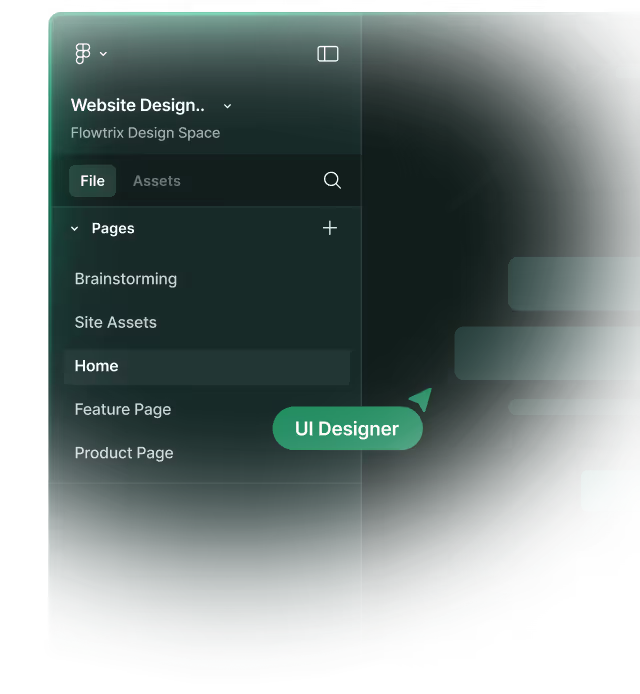
While many B2B buyers still convert on desktop, Flowtrix strictly adheres to Mobile-First indexing principles. During our Figma design phases, our UI team simultaneously creates the mobile and desktop views. When developing in Webflow, we utilize CSS Flexbox to ensure that complex desktop Data Visualizations stack elegantly and remain fully interactive for the mobile executive reading a case study on their commute.
Master Webflow.
Get insights directly.







.svg)

.svg)



%201.svg)


.svg)
.svg)