

What are the WCAG?
The Web Content Accessibility Guidelines (WCAG) are a highly detailed set of technical rules published by the WAI that explain exactly how to make web content accessible to people with disabilities. The guidelines are organized into four core principles—content must be Perceivable, Operable, Understandable, and Robust (POUR)—and are graded on three levels of strictness: A (Minimum), AA (Standard), and AAA (Exceptional).
Why WCAG AA Compliance is the Enterprise Standard?
Hitting WCAG AA compliance is the accepted global benchmark for modern B2B SaaS web development.
- Color Contrast: WCAG dictates the exact mathematical Contrast Ratios required for text (typically 4.5:1). This ensures that users with color blindness or low vision can read your Value Proposition without eye strain.
- Keyboard Navigability: Many users with motor impairments cannot use a mouse. WCAG requires that a user must be able to navigate every single link, dropdown, and Lead Form on your website using only the "Tab" and "Enter" keys on their keyboard.
- Pause and Control: WCAG rules state that any moving, blinking, or scrolling information (like an auto-playing Carousel or a background video) must have a mechanism for the user to pause, stop, or hide it to prevent triggering seizures or cognitive overload.
- Error Prevention: For financial or legal B2B software, WCAG requires that users have the opportunity to review, correct, or reverse their form submissions before finalizing a transaction, protecting them from catastrophic mistakes.
Example from Flowtrix Projects
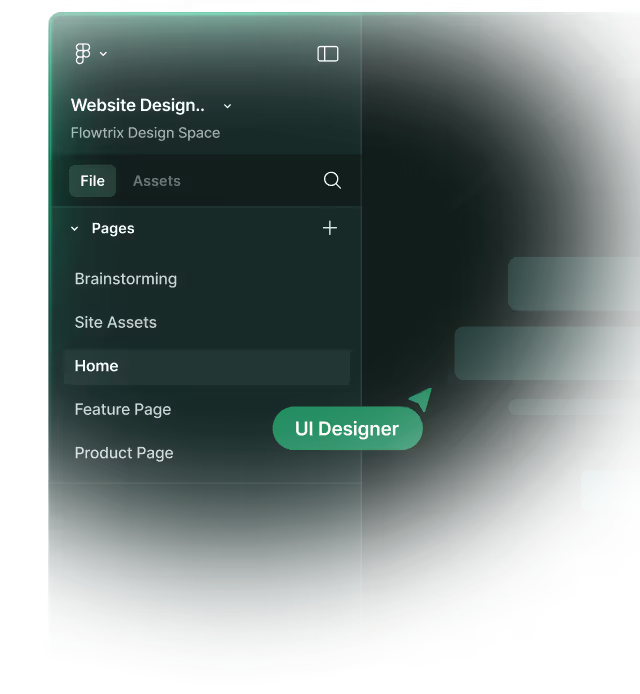
During the Quality Assurance (QA) phase of every Flowtrix Enterprise build, we run rigorous WCAG AA audits. We simulate keyboard-only navigation, run color blindness emulators over our Figma designs, and ensure all Webflow CMS images require Alt Text before they can be published. This meticulous attention to detail guarantees that your brand is legally protected and universally accessible.
Master Webflow.
Get insights directly.




.avif)






.svg)
.svg)

